
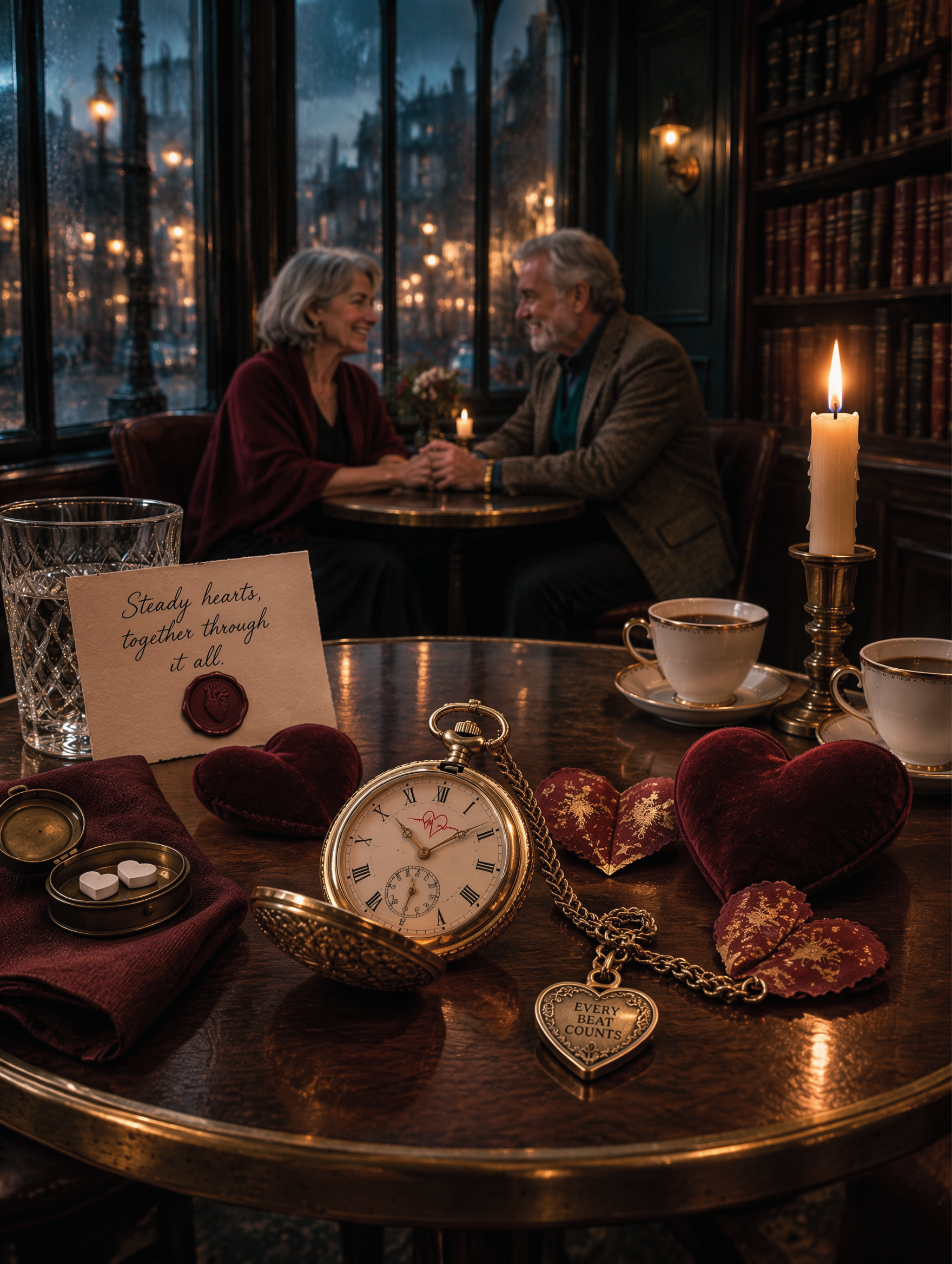
For many people with cardiovascular disease (CVD), romance is a complicated subject. Yet the research is clear: the relationships we keep are tied to heart health. To be without community, love, and contact with others not only causes us to be lonely, but can actively damage our cardiovascular health and overall functioning.
What the Research Says:
Psychologists Paul S. Greenman, Vanessa Tassé and Heather Tulloch describe the link between couple relationships and heart health as “well established” (Greenman, Tassé and Tulloch, 2015). In their review, isolation, loneliness, conflict and distress within committed relationships are tied to the development of heart disease and to premature death. On the other hand, feeling that your partner is emotionally available and responsive is associated with lower blood pressure, a calmer cardiac response to stress, and a reduced sense of threat in stressful situations (Greenman, Tassé and Tulloch, 2015). This suggests a potential benefit to connection between people, or, more romantically, between two supportive hearts.
However, a ‘relationship’ alone is not enough. The quality of the relationship matters, not just whether one exists. In one study, men who rated their marriages as highly satisfying in the year after bypass surgery were 2.7 times as likely to be alive 15 years later as less satisfied men, and satisfied women were 3.9 times as likely (King and Reis, 2012). So, if you have a loving, supportive relationship where one partner is a source of peace, trust, support, and understanding for the other, this type of relationship benefits your cardiovascular health.
One finding speaks directly to those of us with heart failure. In a study of 191 heart failure patients and their spouses, the spouse’s confidence in the patient’s ability to manage their illness predicted survival better than the patient’s own confidence. Patients whose spouses doubted them were more likely to die within four years (Rohrbaugh et al., 2004). In other words, being believed in may literally help keep us alive.
However, not all relationships are perfect. So, in cases of illness like cardiovascular disease, many people choose to be alone to make life “easier” on themselves. However, loneliness also carries its own risk. A meta-analysis of 16 long-term datasets found that poor social relationships were associated with a 29% higher risk of coronary heart disease and a 32% higher risk of stroke (Valtorta et al., 2016). A more recent review found that having an intimate partner is linked to a lower risk of developing coronary heart disease and a better outlook for patients, while strain and conflict in those relationships are linked to higher risk (Smith, 2022). So, while relationships are tricky, it is essential to choose a supportive, understanding partner to preserve long-term cardiovascular health, and avoiding relationships altogether can, in fact, do more harm than good.
Before someone decides to keep or end a relationship based on this research, remember that most of it is observational, so it shows a strong link rather than proving cause and effect. Regardless, the pattern is consistent: love, companionship and support can help protect people with CVD, especially compared to facing the illness alone.
When Illness Strains a Relationship:
Gaining and keeping these benefits isn’t easy. I’ve written often on this blog about the stigma that comes with CVD, and it follows us into dating and romance too. People with CVD are often seen as weak, and partners may doubt whether we can be relied on. When illness strikes, some couples don’t survive it. Not everyone can carry each other through hard times.
The research reflects this. In a corrected 2015 analysis of more than 2,700 marriages of Americans over 50, sociologists Amelia Karraker and Kenzie Latham found that the gender gap in divorce after serious illness was statistically significant for one condition: heart problems. When a wife developed heart problems, the marriage was more likely to end in divorce than when a husband did (Karraker and Latham, 2015).
Support also has to be the right kind. Collaboration and shared problem-solving are linked to better outcomes for heart patients, while criticism, blame, and overprotection generally are not (Smith, 2022). Being treated as fragile is not the same as being supported.
Isolation and Self-Worth:
Sometimes the weight on someone with CVD is too heavy to carry alone. Yet instead of reaching out, many of us assume it would be too much for a partner to handle. We fear our partner will see us as weak, and that the relationship will shift overnight from one between equals to one between caregiver and patient. That humiliation can feel impossible to face, let alone bear.
So, to protect ourselves and the people we love, many people with CVD withdraw instead of reaching out. Some come to believe love isn’t worth the fight and, worse, that they themselves aren’t worth fighting for, because their hearts are too broken for love.
But that bleak view isn’t the truth. Many couples, whatever their age or illness, have found love and support despite these difficulties. Having someone to love matters, even when it isn’t easy, and from a cardiovascular standpoint, the research suggests the benefits outweigh the risks.
And if you’re single, that doesn’t make it any less true. The loneliness research covers social connection in general, so friendships, family, and community count too. Don’t let fear conquer your self-worth and rob you of the happiness, health, and stability connection can bring.
Conclusion:
Love with a heart condition is a challenge. Often, it strains even the strongest relationships. However, if you find yourself a diamond, someone who can support you, it takes courage to find strength and companionship in others, especially in our darkest hour. Yes, it could break an already battered heart. But the hope it brings is powerful. Treasure them. Beca’re the diamond in the rough, and your heart and health will thank you.
So don’t shy away from love this Valentine’s Day. It may protect both your emotional health and your heart.
What do you think? Has your heart condition affected your love life?
Comment below.
Keep ticking, everybody!
Reference List:
Greenman, P.S., Tassé, V. and Tulloch, H. (2015) ‘Straight to the heart: romantic relationships, attachment, and the management of cardiac disease’, in [editor and book title to confirm]. Available at: ResearchGate (Accessed: 24 October 2026).
Karraker, A. and Latham, K. (2015) ‘In sickness and in health? Physical illness as a risk factor for marital dissolution in later life’, Journal of Health and Social Behavior, 56(3), pp. 420–435. doi: 10.1177/0022146515596354.
King, K.B. and Reis, H.T. (2012) ‘Marriage and long-term survival after coronary artery bypass grafting’, Health Psychology, 31, pp. 55–62. doi: 10.1037/a0025061.
Rohrbaugh, M.J., Shoham, V., Coyne, J.C., Cranford, J.A., Sonnega, J.S. and Nicklas, J.M. (2004) ‘Beyond the self in self-efficacy: spouse confidence predicts patient survival following heart failure’, Journal of Family Psychology, 18(1), pp. 184–193. doi: 10.1037/0893-3200.18.1.184.
Smith, T.W. (2022) ‘Intimate relationships and coronary heart disease: implications for risk, prevention, and patient management’, Current Cardiology Reports, 24(6), pp. 761–774. doi: 10.1007/s11886-022-01695-4.
Valtorta, N.K., Kanaan, M., Gilbody, S., Ronzi, S. and Hanratty, B. (2016) ‘Loneliness and social isolation as risk factors for coronary heart disease and stroke: systematic review and meta-analysis of longitudinal observational studies’, Heart, 102(13), pp. 1009–1016. doi: 10.1136/heartjnl-2015-308790.
#cvd #romance #love #illness #heartdisease #valentinesday #lonliness #medicaldevice #pacemaker #cardiachealth #cardiovascularhealth #congentialheartdisease #cardiovasculardisease #tips #advice #travel
-
Greenman, P.S., Tassé, V. and Tulloch, H. (2015). Straight To The Heart: Romantic Relationships, Attachment, and The Management Of Cardiac Disease. [online] ResearchGate.