
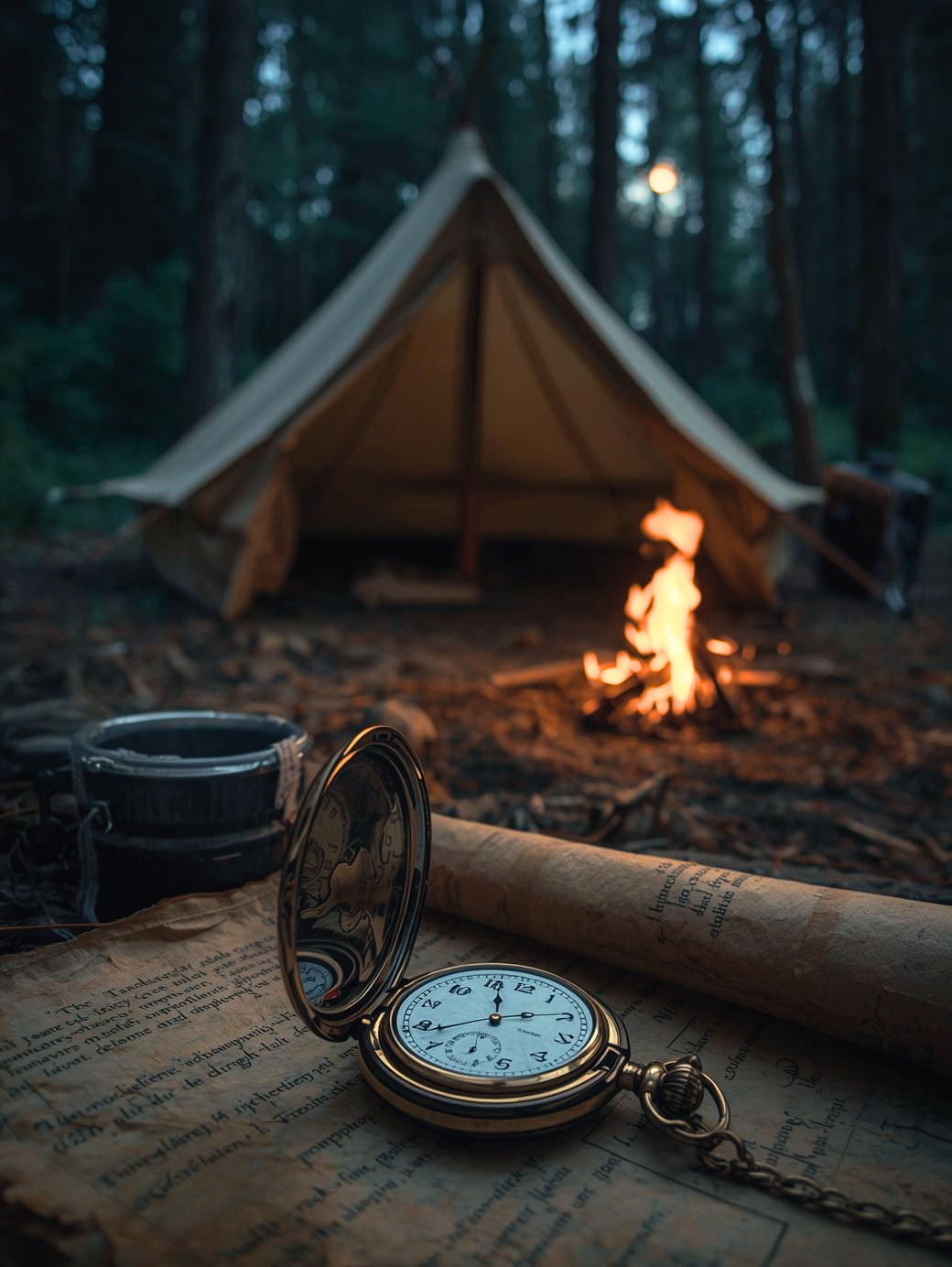
With summer around the corner comes prime camping season. This is why so many pack up their tents and head out into the wilderness to spend quality time experiencing the beauty and majesty of nature, listening to the wild sounds of animals and water flowing beneath a starry sky and a big, full moon… But is it safe to go camping if you have a pacemaker?
Let’s find out.
Generally, camping is regarded as both a mentally and physically healthy activity. The article, Camping And Quality Of Life by Fu, Guo and Zan, states that “camping is a common activity among the Western Culture which provides purposive leisure, social, education and therapeutic activities. It allows campers to escape from city life and enjoy Nature” (Fu, Guo, and Zan, 2013). This activity is considered positive, especially in Western cultures. Even the book, Don’t Get Sick by Buck Tilton and Rick Bennett, which discusses potential health problems facing people while camping, also marvels at the allure of the experience. “You have heard the ‘Call of the Wild.’ It is a clarion summons rich with promise. Into your backpack or dry bag, after a bit of contemplative thought, goes the gear for the night, a week, or more. Often it takes only the first step on the trail or the initial stroke of the paddle before you begin to feel what you came for: the stirring of adventure, the solace of silent places, the beauty that soars straight to the heart. The exercise is good for the body. The change is good for the mind. The peace is good for the soul…” (Tilton and Bennett, 2002). However, the question remains: Is camping healthy for someone with a compromised heart? And what if you have a pacemaker?
Therein lies the rub.
For people with heart conditions, there is often an additional set of considerations when it comes to sports and activities. Camping is no different. First, in my experience, the most important factor is planning the campsite effectively. Particularly, in that it is within one to two hours of a place where medical help is available. So, I’m not saying stay out of the woods, but if you want to go camping in the wilderness, be certain to know your geographical location, know the local medical centers, let your doctor know where you are, and be absolutely certain to bring at least one, if not two, fully charged extra batteries for your phone. This way, if an injury or cardiac event, however unlikely, were to occur, then one can reach the local hospital/clinic easily, and they can more easily find you if you cannot physically find them.
Another factor to consider is not to travel alone if you have a cardiovascular condition. Now, I might be called something of a hypocrite here because I do prefer to travel alone. However, ruined castles, which double as heritage sites, are the more remote places I go to, and even then, I follow the rule of knowing the local medical facilities and having an extra battery pack with me just in case.
But going out into the wilderness is a different matter entirely. While camping, someone could contract waterborne diseases from improperly cooked food or from not boiling water correctly. That’s why it would be wise, if you have a heart condition, to mitigate risks. I would recommend bringing precooked meals (and of course, s’mores are ok). The book, Don’t Get Sick, also suggests, “keep the appropriate vaccines up to date. Practice wilderness hygiene. Get enough rest [because] exhaustion compromises immune function. Eat enough, and eat a balanced diet. Malnutrition is the world’s biggest cause of immune fatigue. Drink enough water. Adequate hygiene improves disease resistance. Control stress [because] chronic stress situations cripple immune responsiveness. Control other chronic diseases [because] metabolic or hormonal disease alters immune function drastically” (Tilton and Bennett, 2002). This is especially useful advice because several illnesses can be acquired when camping without adhering to these rules, thereby risking heart-related complications.
Now, the aspect of a pacemaker adds another layer to this discussion. In addition to the risks already mentioned, there is also the potential to be struck in the chest. Perhaps it is by tripping over a root on a trail or maybe being whacked by a canoe paddle. Regardless, it is important to be mindful of the pacemaker site and avoid striking it. In this case, I would recommend wearing a padded vest, just for a little extra protection at the site.
Personally, as someone from Colorado, I have a lot of experience with camping culture, as outdoor activities like this are common in my state. My family and I used to go camping every summer when I was a child. I loved the outdoors, wandering the trails and playing on the shores of the lake… even if I did get stranded in a canoe in the middle of it once. Regardless, I had very little trouble with my illness, although I was young and rested when I needed to. That’s why some of my fondest memories from my childhood were around the campfire and under the stars. Granted, I have not gone camping in many years, but I highly recommend it to anyone who enjoys the outdoors and making memories forged in nature.
Whether someone has cardiovascular disease or a pacemaker does not determine whether one can or cannot participate in camping. All it does is increase the cautionary scale and the need to be somewhat more mindful of where and how one camps. So, if you have the urge to go out and have an adventure, don’t let your cardiovascular disease or pacemaker stop you. Once you’ve cleared it with your doctor to make sure your heart is healthy enough for it, have a wonderful time away from urban society, basking in the fresh air, and sleeping under the stars.
Did you find this advice helpful? Do you enjoy camping?
Comment below.
Tune in next Monday and Friday for more! I will be writing more now that I’m finally feeling better, so I’m getting a new, more frequent schedule.
Keep ticking, everybody!
P.S. Are there any aspects of CVD health or pacemakers you’d like to know more about?
Feel free to email me at:
blairmueller28@gmail.com
Reference List
Fu, F.H., Guo, L. and Zan, Y. (2013). Camping And Quality Of Life. Open Journal Of Preventative Medicine. [online] Available at: https://catalog.article4pub.com/id/eprint/503/1/OJPM_2013061014324155.pdf.
Tilton, B. and Bennett, R. (2002). Don’t Get Sick: The Hidden Dangers of Camping and Hiking. The Mountaineers Books.
#cvd #chd #camping #sports #nature #activities #summer #afib #atrialfibrillation #pacemaker #chronicillness #heartdisease #cardiovasculardisease #asthma #elderly #medicaldanger #medicaldevice #achd #congenital #heartsurgery #cardiology #experience