
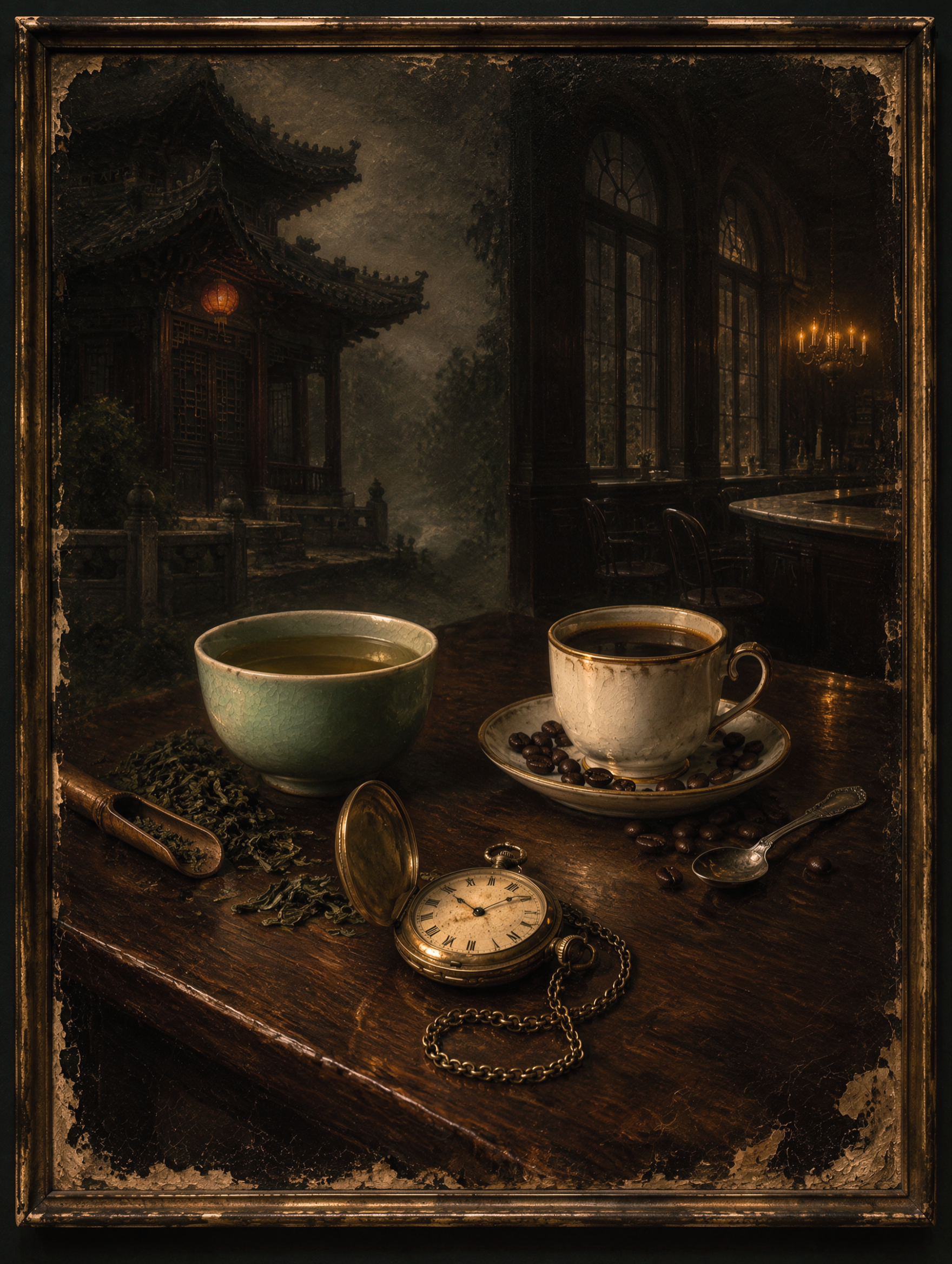
“Aging is not 'lost youth' but a new stage of opportunity and strength.”
— Betty Friedan
One of the hallmarks of cardiovascular disease (CVD), and of its elder, meaner brother, heart failure, is a particular kind of exhaustion. With it comes a deep desire to get your energy back and, through it, to reclaim all that was, could have been, and should rightfully have been yours. It is as if the weariness itself were the problem to be cured, and if it were gone, one could return to the life before. As someone with a master’s in World Heritage Studies who also lives with CVD, I can say with certainty that, unfortunately, this is impossible. One simply does not regain one’s youth. Philosophers, historians and learned people of every culture have come to the same conclusion, and it is the hardest one to accept: fate.
Yet while fate cannot be challenged and the clock cannot be turned back, we can still steer the ship we sail. That is why we may need alternative methods to reach the same goal. We do not have to lose our strength or our health entirely, but we do have to maintain our health as best we can. A compromised or failing heart needs more maintenance, but it is still possible to live a full life while tired. It should be remembered that such a feat can be achieved without reaching for stimulants like the caffeine in coffee and green tea. You just have to know how. It isn’t easy, but trust your heart, yourself and your doctor to help you navigate this new lifestyle., trust your heart, yourself, and your doctor to help you navigate this new lifestyle.
Cardiovascular Weariness:
It is difficult to explain the depth of the exhaustion that comes with a heart condition, especially when recovering from an operation. The mental and physical toll of losing your endurance and vibrancy can be startling, not only for the person experiencing it but for those around them as well.
For me, it feels like having a chain around my ankle dragging me underwater. It is a perpetual battle: I have to twist, pull and outmaneuver it to keep my footing, knowing it will pull me under again, and that I will need the strength to pull myself and my failing heart out once more. It is a team effort, but difficult all the same.
So it makes sense that I, and millions of other people, reach for a pick-me-up like coffee or green tea when we’re tired, especially when the advice comes from medical professionals. However, I urge caution. I recently had an experience I believe is worth sharing, so that others don’t have to go through the same thing, and so your heart has the best possible chance of recovering and holding up in the long run, out “in the wild” among the drinks and social expectations of everyday life.
Why I Wrote This:
This past year has been something of a roller coaster for me, and one of the biggest events has been learning to manage heart failure (which I did not cause). It took a few months of trial and error, but I believe I now have a routine that works about 90% of the time. Reaching that point took a long time and a lot of effort. I had to figure out what to eat and drink, how much, how often, when to rest and when to move. However, I did make one clear mistake.
I have had arrhythmias whenever I drank coffee for a while now. As much as I missed it, I cut out coffee almost immediately, because I simply could not afford the medical risk. I cannot stress enough that I did not make this decision lightly. I was giving up my beloved Starbucks dragon fruit refreshers, my white chocolate mochas and even simple, reliable milk coffee. Even a sip of any of them would send my heart into a tizzy for hours. Arrhythmias like this are deeply unpleasant. They steal my breath, fog my thoughts and leave my body weak. It is an extremely disconcerting experience.
The Hospital Discussion:
A few months ago, I was recovering from an ablation and moving out of an apartment where exposure to sewer gas had led to an acute worsening of my heart health. At the time, no one believed me. As you can imagine, I was stressed. I was also so tired from balancing my food intake and my ablation recovery that I couldn’t tell what was wrong.
Talking with the ER doctor was enlightening. He said I had been having a lot of PVCs (premature ventricular contractions) since my ablation, but that nothing was really wrong apart from the heart failure. As you can imagine, that was ironic. I asked whether he had any advice to make the process easier.
He said it was good that I had cut out coffee, and enthusiastically recommended green tea instead. It was gentler than coffee, he said, and gave longer-lasting energy that was better for the heart.
Now, you have to understand the situation I was in: post-ablation, adjusting to heart failure, moving out of an apartment, job hunting and learning a language. Three world-shattering problems were combining. First, my executive functioning was only slowly coming back online as my heart healed. Second, I was in a state of perpetual terror. Third, I was bone-deep exhausted, which is common for anyone recovering from a heart procedure. Granted, what I was doing was brave, but you can’t be brave if you’re not afraid. And God, was I terrified.
So I didn’t think much about the green tea. I simply did what the doctor said, immediately. At first it seemed to work. Caffeine has a mild diuretic effect, which seemed to help with the salt and fluid balance that heart failure demands, and the tea did give me steady energy.
However, there was a problem: caffeine, anxiety and heart palpitations.
None of them were good. It got to the point where I had symptoms of full-blown AFib again for a day, and I had to take my emergency heart failure medication. Thank goodness, once I realized the green tea was the culprit, my heart pulled itself out of it (God bless the heart). This had been a complete blind spot for me.
Later, sitting in my room and savoring my first full breath in a day as my heart returned to its blessed normal rhythm, it hit me: could this happen to someone else?
Popularity of Coffee and Green Tea:
I ask because coffee is the most consumed drink in the world after water (Butt and Sultan, 2011), and green tea is hugely popular too, so it is perfectly normal for people to rely on them to keep up with everyday life. Sometimes the stress of work, managing the kids or worrying about the future keeps us up at night, and we can’t face the day without nodding off. Or maybe we reach for caffeine out of habit. Or maybe it’s simply what you drink when you meet your friends.
If you have a heart problem, caffeine may feel even more necessary, because your energy is lower than it used to be. You lose your breath, or your train of thought, more easily. So on the surface, coffee, or at least green tea, seems like the logical choice for adapting to your new condition.
There are even articles that recommend coffee and green tea for managing heart disease. One review explains: “Coffee’s most well-known constituent, caffeine, is a psychostimulant that can result in physical dependence. There has been significant interest in the health outcomes from habitual intake of these beverages and their potential role as modifiable risk factors in cardiovascular disease (CVD). It is a common misconception that moderate coffee and tea consumption is not safe in patients with CVD. In fact, numerous studies have reported a beneficial role of moderate coffee or tea intake in CVD prevention and management” (Chieng and Kistler, 2022, p. 399). Research in this area is ongoing, however, and the debate over coffee’s risks and benefits is far from settled (Butt and Sultan, 2011). My personal experience has made me more cautious about caffeine and CVD.
Levels and Severity of CVD and Caffeine:
I am not saying you should avoid caffeine altogether the moment you hear the words “heart problem.” As I mentioned, some research suggests these drinks may have real health benefits, and depending on your circumstances, they may help you. When I was younger, I drank coffee often. Before class in high school and whenever I needed some treat. I have written about coffee before, but given recent events, I think it’s important to address both green tea and coffee, and the thing they share: caffeine.
As I get older and my condition progresses, my heart has become more “touchy.” This is not unusual: age is one of the factors associated with arrhythmias (Zwietering et al., 1998). It is now normal for caffeine, even from my favorite drinks, to trigger arrhythmia or bouts of AFib, some brief and some long-lasting.
So I urge caution: watch for red flags with caffeine, including tea and coffee. Not everyone with CVD will experience this. But as you get older, or as your condition worsens, it is wise to keep your cardiologist more and more informed about what you eat and drink, especially caffeinated drinks. Symptoms like palpitations and breathlessness are always worth reporting, because they are associated with arrhythmias (Zwietering et al., 1998).
It might be fine, or they might have thoughts. Either way, it doesn’t hurt to ask.
The point is to be cautious now, rather than paying the price later, as I did.
Tips:
Talk to your doctor.
Your doctor is your first line of defense against AFib, flutter and other rhythm problems. It’s good to do your own research, but check with them before you start an unfamiliar herbal tea or caffeinated drink. Help them help you.
Do not let fear of arrhythmia stop you.
Live consciously, and therefore wisely. Fear shouldn’t run your life, but awareness should shape it.
Take your medication as directed.
It helps keep your heart rhythm stable and predictable, and makes it less likely that your heart starts beating to its own drum.
Maybe have one cup instead of two.
If you have a heart condition, it’s important not to give up everything that brings you joy. The point is to adapt. If you can’t have three cups of coffee anymore, maybe cut back to an amount your heart, and your cardiologist, agrees with.
Green tea is gentler, but it isn’t caffeine-free.
It contains less caffeine than coffee, but not none. As my experience shows, a sensitive heart can still react to it. If you drink it, do so in moderation.
Decaf is absolutely an option.
If you want coffee, ask for a single shot instead of a double, or simply order decaf. Decaf green and black teas exist too. Keep in mind that decaf still contains a small amount of caffeine, so if you are very sensitive, start slowly.
Try caffeine-free herbal and fruit teas.
If you still want a warm drink, there is a whole world of herbal and fruit teas, such as chamomile or raspberry, that are naturally caffeine-free. The ones to watch are the “true” teas from the tea plant: green, black, white and oolong all contain caffeine. As with any herbal tea, check with your doctor first, since some herbs can interact with heart medications.
Conclusion:
I am not saying my experience reveals some hidden conspiracy, or that heart patients can never have coffee, green tea or other caffeinated drinks. I do believe you should talk with your doctor about whether caffeine may be a concern for you. With this article, I simply hope to raise awareness and reduce the stigma around health problems, so that people with heart conditions can live longer, fuller lives. Ideally, they can do that while sipping their favorite drink without fear that it will compromise their health. So, if you have a heart condition, remember: regular coffee can hit harder. Green tea is gentler, but it can still pack a caffeine punch if you drink too much, too often, or have a particularly sensitive heart.
So drink wisely. If you do need to make a change, think of it not as a loss but as a problem avoided. Protect your heart, and it will protect you in return. And who knows, lemon water or a caffeine-free herbal tea might become a delightful new habit.
What do you think? Can you relate?
Comment below.
Keep ticking, everybody!
P.S. Are there any aspects of CVD health or pacemakers you’d like to know more about?
Feel free to email me at:
Reference List:
Butt, M.S. and Sultan, M.T. (2011). Coffee and Its Consumption: Benefits and Risks. Critical Reviews in Food Science and Nutrition, [online] 51(4), pp.363–373. doi:10.1080/10408390903586412.
Chieng, D. and Kistler, P.M. (2022). Coffee and tea on cardiovascular disease (CVD) prevention. Trends in Cardiovascular Medicine, [online] 32(7), pp.399–405. doi:10.1016/j.tcm.2021.08.004.
Zwietering, P.J., Knottnerus, J.A., Rinkens, P.E., Kleijne, M.A. and Gorgels, A.P. (1998). Arrhythmias in general practice: Diagnostic value of patient characteristics, medical history and symptoms. Family Practice, [online] 15(4), pp.343–353. doi:10.1093/fampra/15.4.343.
#cvd #chd #coffee #greentea #caffeine #tea #cafe #teahouse #mentalhealth #sociallife #heartfailure #heartproblem #travel #arrhythmia #afib #medicine #disabilityawareness #chronicillnessawareness #autumn #hearthealthy #medicalprocedure #procedure #cardiac #cardioversion #chronicillness #medicaldanger #medicaldevice #achd #congenital #heartsurgery #cardiology #experience #pacemaker #hope #advice