
Infantilization and CVD: A Forced Endless Childhood
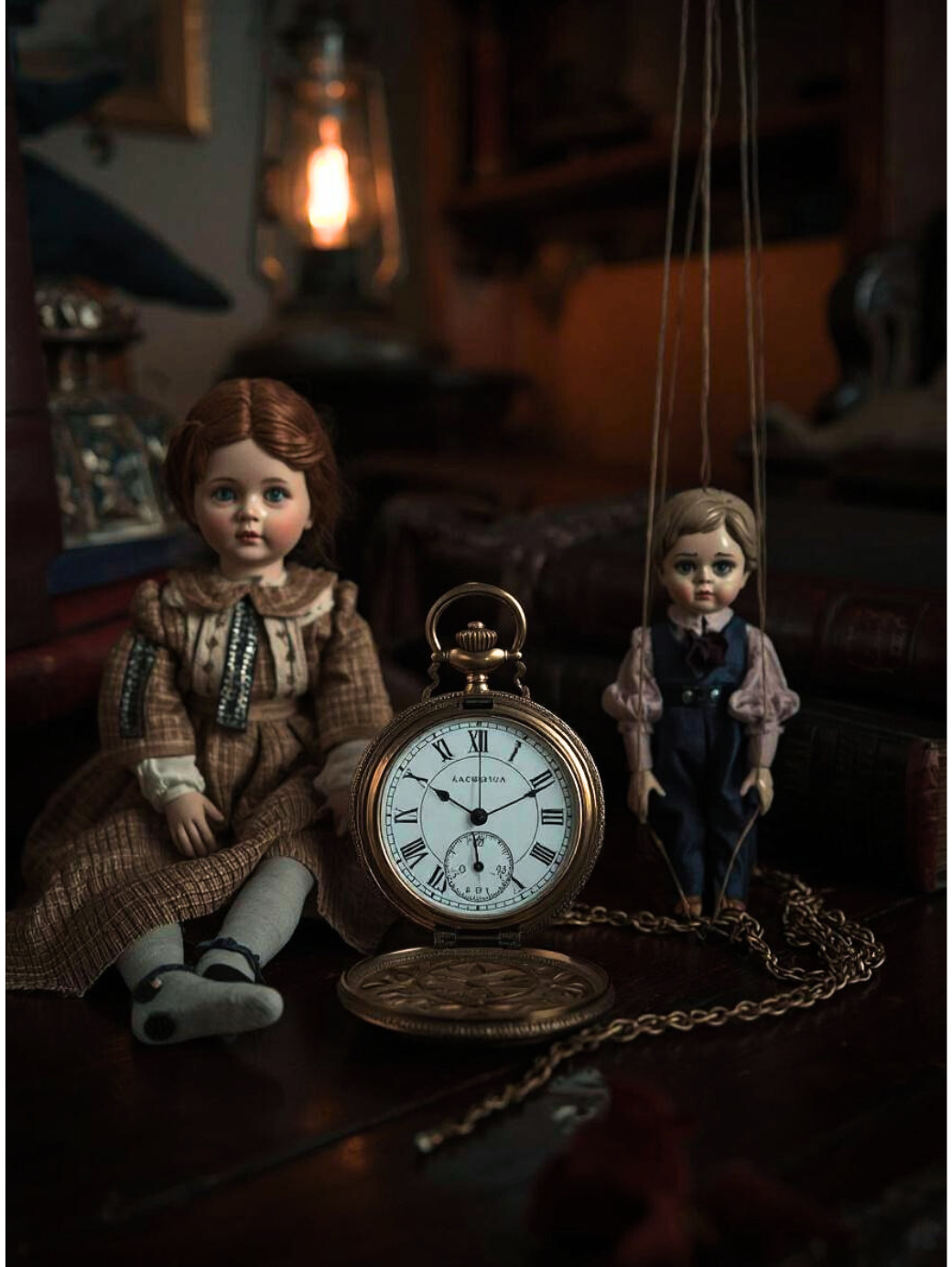
I have a lifetime of experience with CVD (cardiovascular disease), and personal knowledge of several types of emotional and psychological abuses that are too common a problem within the community.
Today, we are going to discuss infantilization and how it ties with parentification in order to create a traumatic, cyclical dynamic, in order to raise awareness of the issue.
In my experience, this means the presumption that a sick person is incapable of looking after themselves. This belief is often used as the groundwork for justifying the manipulation and exploitation of such individuals for the benefit of others.
Personally, I have encountered it all over the world, often because of my short and malformed arm and especially because of my heart condition, from strangers, friends, and even family members.
But how common is infantilization? What does it entail, and why does it occur? Let’s dive in.
The article, The Damage Caused by Infantilizing the Disabled, by Erik Raschke of PsychologyToday, discusses how “Parents, caregivers, and teachers often believe that they are being kind or benevolent when, in fact, they are inadvertently holding back a disabled person from their right to independence” (Raschke, 2022). Furthermore, “infantilization is often done under the guise of ‘for their own protection’” (Raschke, 2022). Consequently, this paternalistic attitude gives people with developmental disabilities even less control over their lives, reinforces their dependency on others, encourages over-compliance, and increases their social vulnerability” (Raschke, 2022). This ‘for your own protection’ excuse works very well, especially on those whose illness has been with them since birth, because it often comes from the parents. It makes the child and/or adult afraid of the illness and, by extension, themselves. This leads to a growing likelihood for low self-esteem, because it means that the individual needs protection while others do not, thus establishing a weakness/strength dynamic between the “ill” individual and everyone else who is “healthy,” strong, and wanted by comparison. This dynamic also serves to reestablish the authority of the “healthy” person as the one who can determine what is and is not dangerous, thus solidifying their god-like authority over the situation, which perpetuates the cycle.
Now, as I have said before, CVD is manageable, but it is an endless battle. So, if you were born with it, there is a constant need for vigilance for one’s entire life, the degree to which depends entirely on the severity of one’s diagnosis. However, infantilization often goes along with a diagnosis of CVD, regardless of the severity.
However, a side-effect of this is the perpetual infantilization of the ill child, even long into adulthood. This can even be the case if you develop CVD later in life, as there is a potential presumption that someone suddenly loses autonomy and capability simply because their heart function is compromised.
But let's take it one step at a time. How does this happen?
First of all, it is often subtle, but its impacts are profound. For example, “‘Parents and caregivers do sometimes engage in ‘micro-actions,’” (Raschke, 2022). Infantilizing the individual often involves “those small day-to-day actions, sometimes subtle,that combine to comprise an infantilizing approach to the individual, such as speaking to the adult with disabilities in a higher frequency voice as one might with small children; not asking the individual’s input on the morning’s clothing choices’” (Raschke, 2022). However, there is often a motivation behind such actions.
Such motivations can even be well-meaning parental protectiveness and guilt (Raschke, 2022). Unfortunately, too much of a good thing never turns out well.
As I said, this is often from a place of good intentions, guilt or, perhaps in cases of congenital illness, it is spurred on through mutual trauma between the parent and the offspring. Suppose the child was in a constant state of terror, and the parents were the only ones who offered safety through needles, surgeries, and painful procedures, all the while promising it would be worth it as long as the child continued to do exactly as the parents said. In that case, it makes sense that the bond would tighten, but it could also be damaged by objectively horrific circumstances.
However, this infantilization is the presumption that it is necessary to hover over the child/adult with CVD. This depends entirely on their individual competence and whether or not they are capable of looking after themselves and handle life responsibilities. I will not say that it is always unjustified since medical problems like CVD can impact one’s cognitive and physical capabilities, often to the degree of an inability to care for oneself. However, it is the presumption of incompetence that is toxic.
The article, Infantilization Across The Life Span: A Large-Scale Internet Study Suggests That Emotional Abuse Is Especially Damaging by Epstein et al., notes how this type of emotional abuse can happen to even those deemed “competent” and still be harmful. “When competent adults are treated like children, negative outcomes sometimes follow” (Epstein et al., 2022). This is because, in my opinion, it presumes that the person in question, who is subject to such treatment, is fundamentally incompetent. The article continues, reiterating how “infantilization is a form of abuse in which a capable adult or young adult is treated like a child. Viewed narrowly in the context of parenting, infantilization has been defined as a ‘parent’s inability to tolerate a child’s age-appropriate growth toward healthy independence’” (Epstein et al., 2022). Now, if there is a trauma-bond forged due to the struggle to keep the child alive in its early life, that may be difficult for the parent to accept because the struggle never truly ended.
However, this trauma bond can also lead to parentification, where the child is made responsible for maintaining the parent's emotions, rather than vice versa, often by being forced to survive to preserve their happiness, sometimes with a carrot at the end of an unreachable stick, promising health and happiness if only they survive one procedure and then the next and the one after that. Then, and only then, when the child is healthy enough, will they be worthy of emotional care rather than dismissed to maintain their parents' comfort.
Parentification is discussed in the article, Intergenerational Risk of Parentification and Infantilization to Externalizing Moderated by Child Temperament by Nuttall et al. from the National Library of Medicine, which discusses how “filial responsibility refers to children’s instrumental and emotional caregiving behaviors within a family system and encompasses both typical and atypical child engagement in caregiving” (Nuttall et al., 2019). This, “instrumental caregiving includes children’s responsibilities for concrete functions that support the family whereas emotional caregiving includes children’s responsibilities for caregiver’s socioemotional needs. High levels of instrumental or emotional filial responsibility are considered to be developmentally inappropriate and a violation of the child’s personal boundaries; the term parentification is used to describe these high levels of filial responsibility” (Nuttall et al., 2019). So, infantilization leads to parentification that can have several adverse effects on a child with CHD long into adulthood.
Following this logic, it makes sense that parentification of the ill child makes them more likely to experience infantilization even as adults. Thus, this perpetuates a cycle that becomes harder and harder to break as the years go by.
The article by Epstein et al. continues, “when competent individuals are treated like incompetent children, a number of negative outcomes are possible, among them a loss of sense of control over one’s life, increased depression and anxiety, anger directed toward caregivers or authority figures, lower self-esteem, suicidality, and damage to relationships” (Epstein et al., 2022). I, for one, can attest to this.
As I, personally, have CHD in its critical form, while growing up, I required multiple medical interventions to save my life. I had four open heart surgeries and have had 3 pacemakers with 2 artificial heart valves. Understandably, my CVD and the management of it take up a significant portion of my and my family’s life.
So much so that this has rendered them incapable of seeing me as anything other than a sick child, not an adult, and certainly not a separate person who can exist as a unique individual rather than as an alarm just waiting to go off. It’s a trauma response, but one that creates infantilization and is solidified by deep-rooted parentification.
It’s like eternally living as someone stuck in the hospital. Even atop the Great Wall of China, hiking in Vail or visiting a castle in Germany… no matter what I do, I am seen only as an accident waiting to happen. When I come home, whether it be to my friends or extended or even immediate family, they want to inquire about my health first, not my adventures, and rarely even ask me about anything beyond my health. All under the presumption that I am my illness and nothing more than that. They often assume I can’t understand their conversations, exclude me, plan their lives around me but not with me, and carry things or do things before I can speak or even think, but then they complain and call me helpless. However, at the same time, I feel unable to verbalize my wants and needs because the very idea that I have those makes them uncomfortable and often leads to lashing out in order to reestablish the hierarchy of the dynamic of healthy caregiver/sick child, no matter how old I get. Therefore, their feelings are preserved, and mine are infantilized.
While I hate this, I in no way mean to vilify them. I only mean to draw attention to this dynamic in action.
The thing is, this is done to preserve my health, which is a worthy goal. But it ultimately ends up putting me in a glass box where I have to tell them every detail of my life in order to make them feel secure, because my existence and my health, which are inseparable, fundamentally do not.
However, I would argue that preserving my health is not the ultimate goal, but rather, it is the illusion that I will have a long life as if that is exclusively in their or my control. Whether it be long or short, due to the infantilization that creates the cycle and the parentification that supports it, in my experience, this dynamic has solidified into a concrete scale where my worth has been, and always will be, judged by the length of my life and what I do to extend something that will fail eventually, and noy by my accomplishments, dreams, and life I choose to live before that happens.
This creates a toxic dynamic where, because the life of the person who was sick is meant to support the emotional needs and validate the efforts of those who have the “kindness,” “selflessness,” and “virtue” of the self-ascribed ‘caretakers’ rather than letting the ‘sick’ person express their true emotions and authentic self.
Honestly, this dynamic has deeply eroded my self-esteem and confidence over the years. This created a constant perpetual state of anxiety, crippling migraines, which all contributed to severe depression and even worse.
However, because of the infantilization, this led to all my friends and family questioning my self-confidence and capability, while pretending to be supportive with kind words and unnecessary support. This was, again, because they assumed the problem was CVD and not being in a constant state of stress caused by consistent infantilization.
Since recognizing this pattern, I have spent far more time away from triggers of this dynamic. This helps lessen the infantilization by friends and family, but not by strangers, because the CVD and my physical condition inspire this reaction to my situation, no matter where I go.
While this presumption that CVD makes a person incompetent is not necessarily true, and in my experience, perhaps others, it is the treatment of the person with CVD and the infantilization of them that may be causing undue stress, which makes them sicker.
Infantilization is not taking necessary care of others; it is taking unnecessary care of others under the assumption that they need it. Oftentimes, with CVD, it is assumed to be worse than it is. Sometimes this assistance is entirely warranted and needed. But when aid is needed, it is important to treat the person as a person, not as someone defined by their sickness.
People with CVD deserve dignity too.
Has anyone else experienced infantilization? Comment below.
Reference List:
Epstein, R., Bock, S.D., Drew, M.J. and Scandalis, Z. (2022). Infantilization Across The Life Span: A Large-Scale Internet Study Suggests That Emotional Abuse Is Especially Damaging. Motivation and Emotion, 47. doi:https://doi.org/10.1007/s11031-022-09989-4.
Nuttall, A.K., Zhang, Q., Valentino, K. and Borkowski, J.G. (2019). Intergenerational Risk of Parentification and Infantilization to Externalizing Moderated by Child Temperament. Journal of Marriage and Family, 81(3), pp.648–661. doi:https://doi.org/10.1111/jomf.12562.
Raschke, E. (2022). The Damage Caused by Infantilizing the Disabled. [online] Psychology Today. Available at: https://www.psychologytoday.com/us/blog/what-will-you-do-when-im-gone/202208/the-damage-caused-by-infantilizing-the-disabled.
#cvd #pacemaker #infantilization #mentalhealth #cardiology #chronicillness #experience #disability #chd #heartdisease