
A Walk In The Park: Motivation To Exercise With CVD
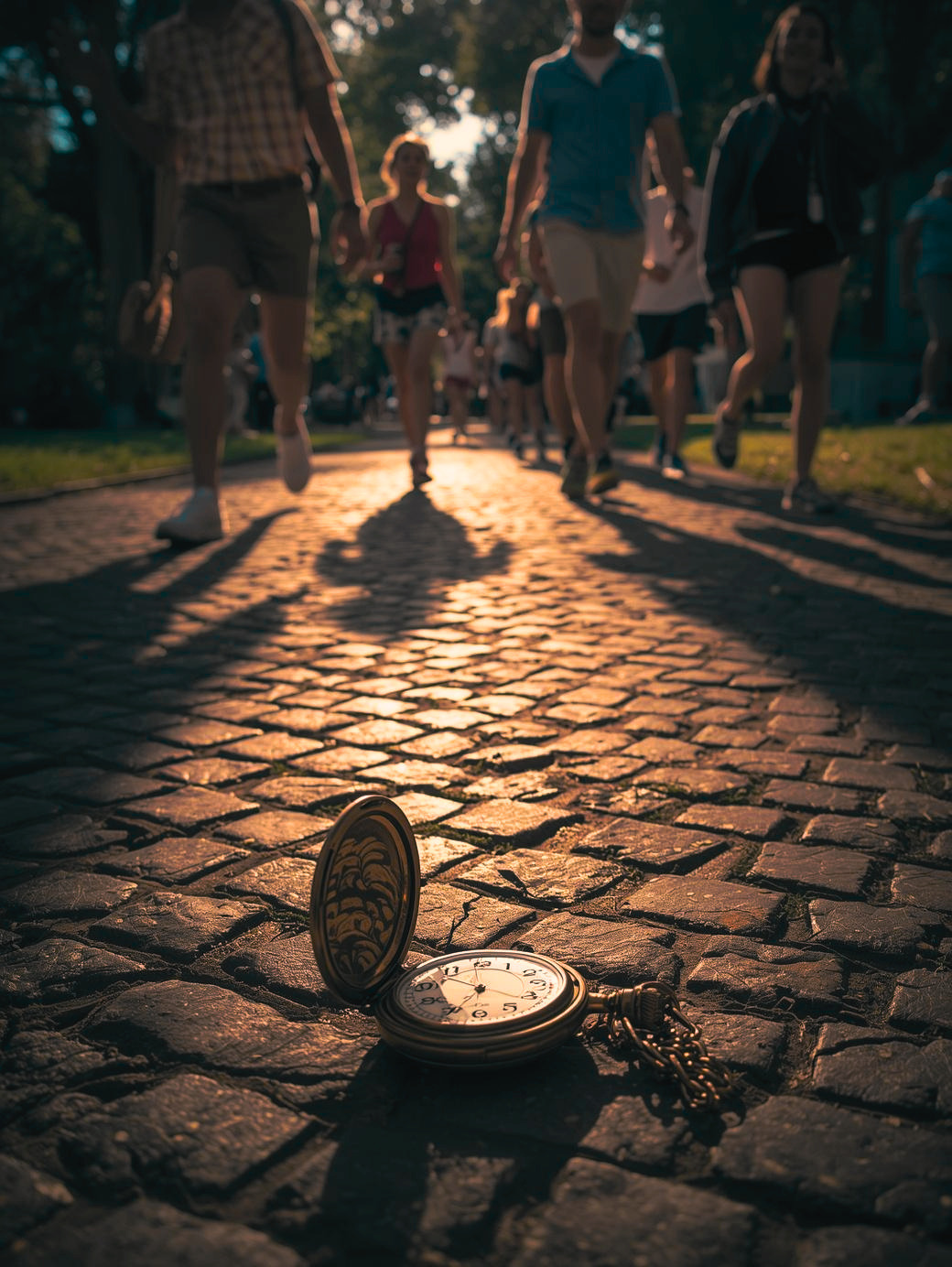
It is common knowledge that exercise benefits the cardiovascular system. Whether it be through intense sports or just a simple stroll to get some fresh air… everything helps. However, it’s far easier said than done, especially if you have cardiovascular disease (CVD). But the biggest issue I have found in my experience and when talking with my friends with health issues is the motivation to do so, and especially to keep doing so to the point where it becomes a habit more than a chore.
Personally, when I do not exercise for a day or more, I often face accusations of laziness or simply being too weak. Once, in order to scare me, my family told me they would take me to the emergency room if I really was “too tired.” It was as if, even as a child, I was, and still am, constantly on trial to prove that I am sick because they assume I'm just a fit person with a poorly functioning heart using illness as an excuse for my inherent weakness, rather than someone genuinely managing a lifelong condition every single day.
While exercise is important for cardiovascular health, it is not easy, especially if you have CVD and your symptoms physically impact your ability to move at all. In this situation, sometimes finding motivation can be particularly difficult. Here are a few challenges I have faced, along with my recommendations for addressing them.
The first problem is isolation. For most people, it is easy to call up a buddy and schedule a regular time to go on a walk. However, after a diagnosis of CVD, oftentimes, patients may notice their social circles shrinking due to a lack of understanding the illness and the assumption of the slow deteriorating weakness that accompanies it. Therefore, according to this logic, it is easier to avoid the sick person than to spend time with them. However, such a response can lead to increased loneliness, which can increase the symptoms of CVD. With isolation, the risk of depression is also not far behind.
This connection between isolation and CVD has been thoroughly documented. The article, Loneliness, Social Isolation, and Cardiovascular Health by Ning Xia and Hiuge Li point out how, “social and demographic changes have led to an increased prevalence of loneliness and social isolation in modern society” (Xia and Li, 2018). Furthermore, “population-based studies have demonstrated that both objective social isolation and the perception of social isolation (loneliness) are correlated with a higher risk of mortality and that both are clearly risk factors for cardiovascular disease (CVD). Lonely individuals have increased peripheral vascular resistance and elevated blood pressure. Socially isolated animals develop more atherosclerosis than those housed in groups” (Xia and Li, 2018). So, this article illustrates how loneliness has become more common, but it also increases the risk of exacerbating symptoms, making it more difficult to exercise in the first place.
While it is important to discuss any exercise limits with your doctor, I still recommend that, if you want to maintain your health with minimal effort, you go for a simple, regular, easygoing walk. Granted, personally, I have to be extra careful because I’m between recovering from a cardioversion and heading into an ablation. My point is that, while I don’t have AFIB anymore, my heart is recovering from the four and a half months of it, and it theoretically could flip back into AFIB if pushed too hard. So, even though I do need to be cautious, it is still a good idea to stay moderately fit, regardless.
Another factor to consider is that the older I get, the more my friends tend to avoid me when I return home from my trips. This is typically because I have to recover from a fresh wave of CVD symptoms, and that factor alone makes them emotionally uncomfortable. I want to make it absolutely clear that I’m not accusing them of moral wrongdoing. It’s just a fact that they are tired of my heart condition and often assume that I am too weak to keep up with them when they go biking, hiking, or participate in any other outdoor sport for which the state of Colorado is so famous.
Part of having CVD is gaining a new label, usually unintentionally, becoming emotionally difficult for other people to be around, especially when going into or recovering from a procedure. Plus, it is just as difficult, at least in my experience, for me to pretend that I am healthy and to force myself into their good graces to make myself worthy of their time.
So, to compensate for both these needs, I meet said acquaintances for coffee or lunch, but not for athletic stuff. This is because it forces them to wait and me to push myself too far. Meeting on neutral ground for a time of pleasantries allows my friends in Colorado and me to meet on equal terms, preserving mutual respect for each other’s time.
On the downside, this leaves me socially isolated when it comes to exercise. I cannot go running, biking, or doing any other active sports, so I often find myself walking alone. However, I find it oddly soothing to walk down the street and into the park in the warm summer sunshine while listening to music, podcasts, or audiobooks to distract myself from the discomfort of the process. Most often, I choose to tie my shoes and head outside in the early morning or late afternoon to avoid the harsh noonday heat.
It should be remembered that walking at all, even on your own, even mildly, is good for your health and that is all that matters. The article Exercise For Prevention And Relief Of Cardiovascular Disease by Tian and Meng supports this, noting that “CVD is a class of diseases which are related to the heart or blood vessels” (Tian and Meng, 2019). These diseases include “stroke, heart failure, hypertension, coronary artery diseases, heart arrhythmia, peripheral artery disease, and atherosclerosis” (Tian and Meng, 2019). Granted, it should be pointed out that these are among the direst of symptoms; they often, but not always, have a direct link to the actions, or rather the inactions of the patients, which lead to these particular results. For example, I developed a heart arrhythmia due to sewer gas exposure — an environmental factor entirely outside my control — which likely contributed to my full-on AFib. While CVD is not something to be blamed on those who have it, there are certain factors that increase the likelihood of developing these more intense symptoms. For example, “individuals with CVD are found to have the accompanying raised blood pressure, elevated glucose, smoking, obesity, lack of exercise, excessive alcohol consumption, and dyslipidemia” (Tian and Meng, 2019). And, “fortunately, CVD can be properly managed and prevented by controlling blood pressure, glucose, lipid, smoking, and alcohol drinking and through lifestyle modifications for sleep, emotion, exercise, and diet” (Tian and Meng, 2019). Of these factors, I want to focus on exercise here.
Any level of exercise is especially important for CVD because “physical inactivity has been identified as the fourth risk factor of death worldwide, leading to approximately 3.2 million deaths annually” (Tian and Meng, 2019). Furthermore, “a systematic review estimates that the lack of exercise leads to 6% of coronary heart disease occurrence worldwide” (Tian and Meng, 2019). So, from that statistic alone, it seems in the individual's best interest to remain active, especially if it is linked to heart disease. Even if an argument could be made that the disease itself isn’t connected, the symptoms of heart disease certainly are connected to and aggravated by inactivity. A “deficiency in physical activity leads to obesity, increasing endogenous levels of inflammatory molecules and coagulation factors. In addition, there is coordinated protective effects to decrease the overall risk of incident CVD by exercise,” (Tian and Meng, 2019). This actually gives some control of a seemingly dire situation back to the person with the condition. “So, having a healthy diet, avoiding smoking, and keeping regular physical activity are the three pieces of advice the WHO recommend[s] to avoid CVD” (Tian and Meng, 2019). The article simply notes that any form of regular movement counts — not just intense sport. There is no need to take to the hockey rink or pick up a football. Sometimes it can be as simple as just remaining active in some capacity, even with a mild, stress-free walk around the block or through a local park.
Personally, I cannot participate in any mountain hikes or castle-wandering for at least a month, but for now, I enjoy walking the neighborhood and/or the local park. And when I do so, I do so alone. I simply enjoy not feeling compelled or obligated to match anyone else's stride or feel self-conscious about being too slow or too fast. This way, my only competition is myself, and I don’t need to multitask by maintaining a conversation while monitoring my heart rate and goals.
Luckily, early morning and late afternoon are when others tend to be out walking too. So, if you do go out walking, it is not wrong to walk alone, but one does not necessarily have to do so because at those times of the day, one is more likely to meet people.
That being said, while I prefer walking alone, it is generally safer for people with CVD to walk in groups, especially if they have more severe forms of the illness. For example, when my pacemaker broke, and I was waiting for a replacement, I could not leave the room alone because people were scared I would suddenly drop. But in the case of walking outside, if you have the strength and the will, the goal is to get outside on a walk, and hopefully, along the way, you can meet others who are eager to do the same.
The beautiful heat of the season is the ideal time of year for an outside stroll. So, it is my recommendation that you don’t let your heart problem hold you back from enjoying the sunshine. Save for your doctor’s recommendation, it is generally wise for people even with CVD to enjoy a walk outside, be it around their neighborhood or the park. There is no need to be self-conscious because the goal is to take one step at a time to maintain your health. That is what matters most and this time of year is also another way to simultaneously combat both progressing CVD and isolation. So, this summer, tie on your shoes and take a step on the pavement or a dirt path. Your heart will thank you for it.
What do you think? Did you find this helpful? Can you relate?
Do you prefer to walk in a neighborhood or in a park?
Comment below.
Tune in next Monday and Friday for more! I will be writing more now that I’m finally feeling better, so I’m getting a new, more frequent schedule.
Keep ticking, everybody!
P.S. Are there any aspects of CVD health or pacemakers you’d like to know more about?
Feel free to email me at:
Reference List:
Tian, D. and Meng, J. (2019). Exercise For Prevention And Relief Of Cardiovascular Disease: Prognoses, Mechanisms, And Approaches. Oxidative Medicine and Cellular Longevity, [online] 2019(3756750). doi:https://doi.org/10.1155/2019/3756750.
Xia, N. and Li, H. (2018). Loneliness, Social Isolation, and Cardiovascular Health. Antioxidants & Redox Signaling, [online] 28(9), pp.837–851. doi:https://doi.org/10.1089/ars.2017.7312.
#cvd #chd #walking #summer #park #trailwalking #socialization #isolation #chronicillness #medicaldanger #medicaldevice #achd #congenital #heartsurgery #cardiology #experience #pacemaker