
Kayaking and CVD: A Worthwhile Effort
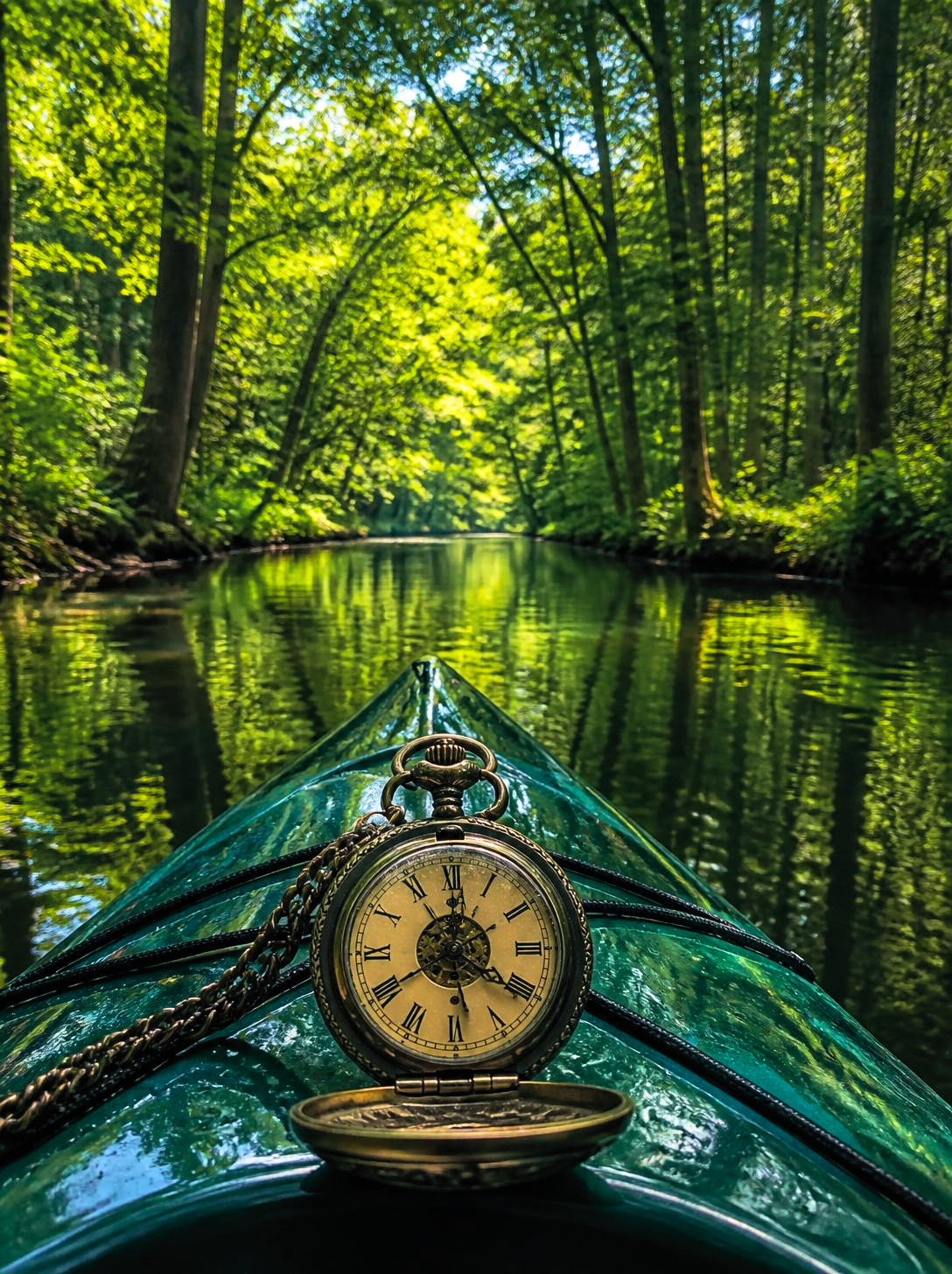
Water sports are often recommended for people with CVD, as they provide resistance and strength training with significantly less risk than other full-contact sports. Now, I was in the Spreewald recently, and there is a reason why the area is called the Venice of Germany. This is due to the ingenuity of the indigenous people who settled it, the Sorbian people, who crafted canals through the landscape to transport both traditional trade goods and agricultural products throughout the area. And, over the past few decades, this place has become a tourist attraction, and now these same canals are often used by said tourist groups to travel by canoe and kayak on a venture to take in the natural beauty of the place.
I once kayaked on the Spree River and, honestly, found the sightseeing side of it all absolutely gorgeous, but the paddling aspect tiring, especially with my short left arm. However, everyone else seemed to truly enjoy themselves.
Afterward, though, I still enjoy visiting the heritage site from time to time, but when I do, I no longer participate in the water sports; instead, I often prefer a glass of white wine beneath the forest canopy as I watch happy groups row by. As I sit there, I do ponder whether this is a missed opportunity and whether it would be more beneficial for me to keep at it. But on a grander note, is kayaking even good for the cardiovascular system, or is it potentially so physically tiring that it could prove detrimental for people with CVD?
Let’s find out.
Kayaking, as a sport, falls under the umbrella of paddling activities, which are discussed in several articles relating to cardiovascular disease. So, from this initial dip into the research alone, one can discern that the connection between this sport and cardiovascular disease is not uncharted territory.
However, no sport is without its risks. The article, Effects of Water Sports On Heart Disease Risk Factors: A Systematic Review, recognizes this and provides a broad initial view of the relation of water sports and CVD as a whole. It is essential to provide an in-depth perspective, especially when dealing with an illness like cardiovascular disease, which is “among the leading causes of death globally, significantly impacting economic and social structures by diminishing quality of life” (Khaleghi et al., 2025). Although this is objectively true, the article also recognizes how “lifestyle changes, particularly increasing physical activity, are effective strategies for CVD prevention and risk factor improvement. Water sports like swimming, rowing, and water walking have shown promise in reducing various CVD risk factors” (Khaleghi et al., 2025). Thus, this study concludes “that aquatic exercise, such as swimming, diving, and water walking, has shown potential benefits for cardiovascular health, body composition, and physical fitness” (Khaleghi et al., 2025). This suggests that water sports in general can benefit cardiovascular health… but what about kayaking specifically?
Another article, Cardiovascular and Functional Benefits Of Kayaking and Dragon Boat Racing In Exercise Rehabilitation: A Narrative Review, by Giuseppe Cabibbo, provides a deeper insight into the nature of kayaking in terms of its historical and cultural connection of this activity and its health benefits in how “historically rooted in transportation, hunting, and cultural traditions across Indigenous populations worldwide, paddling has evolved into organized competitive and recreational disciplines with growing participation rates. Over the past three decades, scientific investigation has increasingly documented the physiological adaptations and health benefits associated with regular paddling activity. Specifically, regarding how, kayaking and canoeing training induce favorable cardiovascular adaptations including improved maximal oxygen uptake, enhanced cardiac efficiency, reduced arterial stiffness, and beneficial metabolic profiles” (Cabibbo, 2026). In addition to this, “the rhythmic, repetitive nature of paddling movements, combined with adjustable intensity and team-based participation options, positions these activities as potentially valuable tools in both preventive medicine and clinical rehabilitation settings” (Cabibbo, 2026). So, not only is it beneficial for preventing cardiovascular deterioration, but it is also helpful in healing one’s heart after the fact.
Given these results, one can conclude that kayaking is extremely beneficial for people with heart conditions, and there should be no hesitation whatsoever in hopping into a boat and taking to the water. It should also be noted that this article is not alone in this opinion. Another one, Improving Physiological Resilience and Fitness Through Rehabilitation In Kayaking and Rowing: An Integrated Study concluded that, “kayaking and rowing can be useful components of comprehensive rehabilitation programmes, contributing to the overall health and quality of life of patients” (Wang and Kozlova, 2026). Particularly due to how, “the results of the study showed a significant improvement in cardiorespiratory endurance in both groups, as presented by a 15% increase in average distance. Muscular strength also increased significantly, showing a 20% increase. Furthermore, flexibility tests showed a 10% improvement” (Wang and Kozlova, 2026). However, in addition to cardiovascular health, this article also states that, “regular kayaking and rowing activities help to improve the physical fitness and physiological stability, as well as the mental state of the participants” (Wang and Kozlova, 2026). This is why, “it is recommended that these activities be incorporated into rehabilitation programmes and individualised according to the condition of the participants to achieve maximum benefit” (Wang and Kozlova, 2026). So, according to this research, not only is kayaking beneficial for one’s general health, but also for one’s cardiovascular health and overall well-being! So, there are literally no downsides…! In theory.
Even so, personally, I recommend that you still discuss taking up this sport with your doctor before you grab a paddle and hop into a kayak. I say this because every individual is different, especially for people with CVD, and a number of factors mitigate the level of benefits this sport can have on one’s health.
For example, I stopped kayaking because of shoulder pain and discomfort from the pacemaker wires. Plus, maneuvering the paddle was too cumbersome for my short arm, and I got embarrassed looking like a fumbling fool. So, in my experience, the ice pack and social humiliation were not worth it for me.
Now, most people with CVD or otherwise do not have to consider these factors, nor do they have a terrible fear of accidentally breaking their medical device. So, perhaps the sport will benefit them? And even if they do not enjoy the sport, the area of the Spreewald and walking along rivers in general are also worthwhile activities. For example, I also participate in boat tours down the river, still walk through the woods, happy as a clam, and get my heart rate up while doing so. So, when one door closes, another can take its place.
However, if you do decide to go kayaking, here's some advice I'd suggest:
You should take a class in the sport beforehand so that you know what you’re doing and don’t start off blind.
Always wear a life vest.
Never go kayaking alone, just in case the worst should happen.
My point is that, medically speaking, the science points to nothing but the benefits of kayaking for those with CVD and how, in theory, kayaking is a delightful and cardiovascularly beneficial sport. However, one should still be mindful of their own needs and discuss their situation with their doctor beforehand, as this is not only safer but can also provide helpful advice to keep them safe. But, if you want my advice, if you want to have fun, take the risk, but wisely. It is fun and delightful, but stay within your own limits. Taking a ride in a kayak is a great and generally cardiovascularly healthy way to make new and beautiful memories.
So, if your doctor agrees and you’re up to it, enjoy a fun day out on the water!
What do you think? Can you relate?
Comment below.
Tune in next Monday and Friday for more! I will be writing more now that I'm finally feeling better, so I'm getting a new, more frequent schedule.
Keep ticking, everybody!
P.S. Are there any aspects of CVD health or pacemakers you’d like to know more about?
Feel free to email me at:
Reference List:
Cabibbo, G. (2026). Cardiovascular and Functional Benefits Of Kayaking and Dragon Boat Racing In Exercise Rehabilitation: A Narrative Review. Journal of Sports and Rehabilitation Sciences, [online] p.e244209. doi:10.32598/JSRS.2026.1134.
Khaleghi, M.M., Zar, A., Krustrup, P. and Al Kitani, M. (2025). Effects of Water Sports On Heart Disease Risk Factors: A Systematic Review. Sport Sciences for Health, 21(3), pp.1337–1348. doi:10.1007/s11332-025-01379-w.
Wang, W. and Kozlova, E. (2026). Improving Physiological Resilience and Fitness Through Rehabilitation In Kayaking and Rowing: An Integrated Study. Science & Sports, [online] 41(4), pp.321–327. doi:10.1016/j.scispo.2025.11.002.
#cvd #chd #kayaking #watersports #travel #medication #summer #hearthealthy #medicalprocedure #ablation #procedure #cardiac #cardioversion #chronicillness #medicaldanger #medicaldevice #achd #congenital #heartsurgery #cardiology #experience #pacemaker #afib