
Fishing, CVD, and Pacemakers: Hook, Line, and Sinker
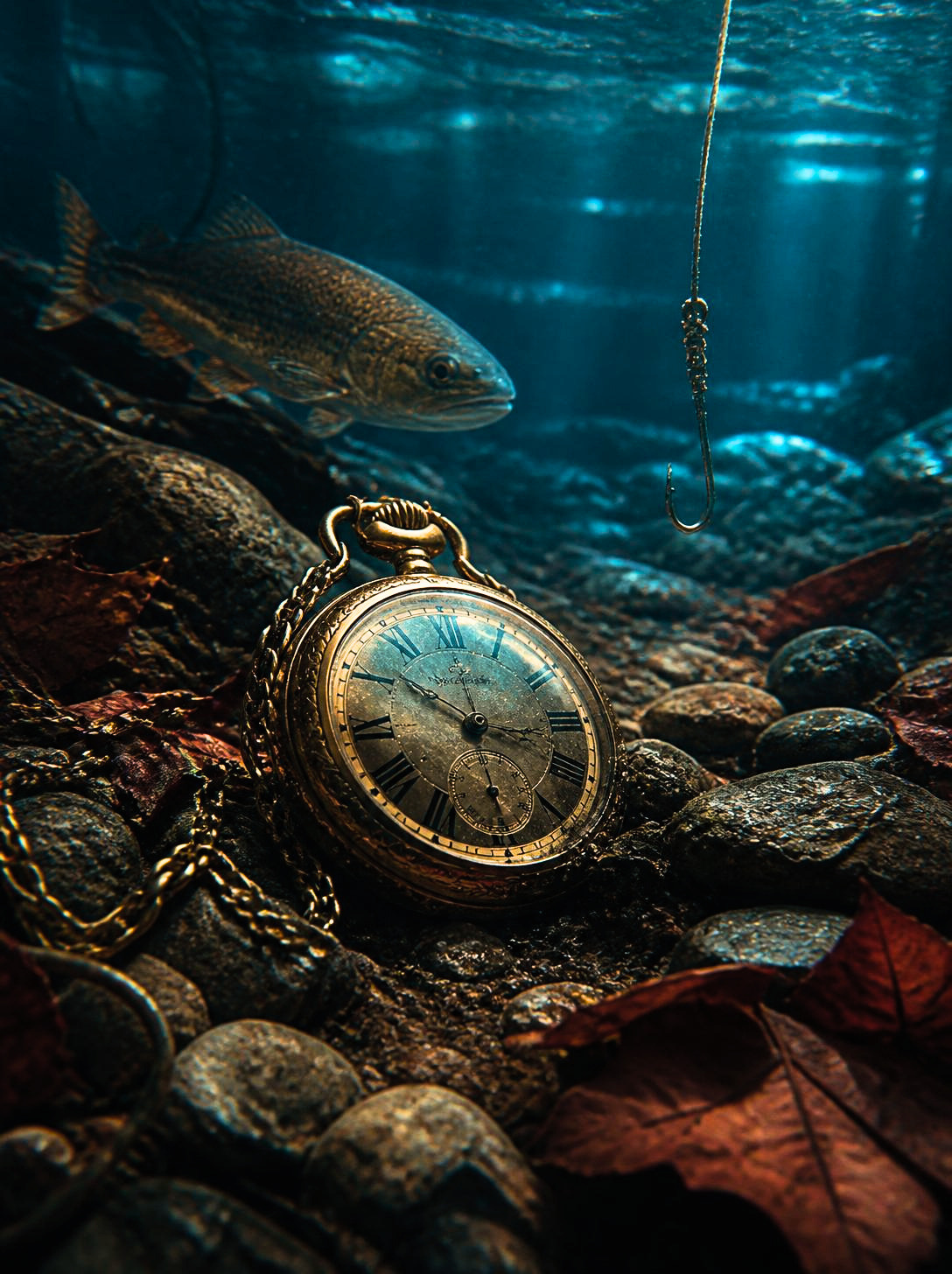
The road of recovery from an ablation is a long one, but once you can walk again, that makes all the difference. One of the first places I went when I was mobile was back to the pond next to my old house, in a nearby neighborhood park. Thoroughly exhausted, I took a seat on a log, reveling in the fact that I could walk that far after my ablation. It’s an old family spot we used to go to when I was young, or at least where I would tag along with my brother and his friends. It was a small pond surrounded by trees where ducks would gather every summer and geese would congregate there every autumn. While sitting there in the sun, I remembered a moment from my childhood when my elder brother and I tied some craft string to sticks and strung it through a bit of ham. We sat down on a log at the edge of the pond and tossed the ham in via our rudimentary fishing rods. Granted, we were crawdad fishing since there were no fish in this particular pond. But honestly, even though I don’t remember if we caught anything that day, it was lovely sitting in the summer sunshine in the late afternoon and spending some time with my sibling. But now that I’m older, I look back at the pond with ducks and its almost grown ducklings gliding over the surface, and I have to ask, is fishing safe if you have a heart condition? Is it safe if you have a pacemaker?
According to my research, fishing looks like a genuinely good option — with some caveats.
In my initial research, I was surprised to find no academic articles that addressed only the connection between either fishing and CVD patients or pacemaker patients. The most common results were about the benefits of eating fish itself, like how in the article, “Fish Intake in Relation to Fatal and Non-Fatal Cardiovascular Risk: A Systematic Review and Meta-Analysis of Cohort Studies” by Ricci et al. states that, “The recommended two portions of fish a week reduces the risk of CVD outcomes by approximately 10%. A full portion of fish a day reduces CVD risk by up to 30%”(Ricci et al., 2023). So, in this way, it seems like the product of the activity is healthy for the cardiovascular system. And, in terms of lack of academic focus on the relationship between the act of fishing and CVD, it seems like the old rule is correct: no news is good news.
Fishing is a leisure sport because there is little likelihood of getting struck by a ball or tripped by a stick. That’s why it is generally considered low effort and low danger for the heart. Although it should be remembered that low effort does not mean “no effort.” The physical effort required, of course, depends on the kind of fishing you do. Whether it is fly fishing, deep-sea fishing, or shoreline fishing, the physical activity required for each type escalates, but the act of reeling, casting, walking, rowing, or standing for long periods can benefit your cardiovascular system.
However, I do have some advice for you on a cardiovascular and pacemaker standpoint. Personally, I have only a little experience fishing, and most of it was from childhood. I do have plenty of experience with pacemakers and perhaps taking risks that may have been less than necessary.
For many, the benefit of fishing is solitude, being alone with only your thoughts and nature. Trust me, I understand this very well. However, if you have cardiovascular disease and/or a pacemaker, this isolation is a double-edged sword, leaving you unintentionally vulnerable. If something goes wrong while you're alone in the wilderness, it may take a long time for help to reach you — assuming you're even able to call for it. And when your heart or pacemaker is malfunctioning, the resulting strain on your lungs and brain can compromise your ability to make rational decisions in a dangerous moment.
I have been in this situation before, and trust me, it is far more dangerous than your mind can even comprehend in such a state. So, it is best to err on the side of caution.
My advice is to avoid going fishing alone. Having a friend or group to go with keeps you safe in case the worst happens and makes the outing more social and lively. However, that sometimes ruins the point of the much-sought-after isolation. So, if you really want to go alone, at least bring a tracker like an AirTag with you so your friends or family know exactly where you are, mitigating the risk solitude may pose.
Personally, I love walking alone and enjoying the quiet rush of rivers and the blessed beauty of nature. But luckily, I have a pacemaker that alerts my doctor whenever there is an issue with the device or my heartbeat. This gives me the confidence to go out by myself, knowing that the doctor will be alerted if anything goes wrong. Even though my pacemaker is far from perfect, I can be grateful that it is at least helpful in this regard.
Another possible concern is that, if you have a pacemaker, the consistent, repetitive motions of casting and reeling may strain your shoulder and aggravate the muscles around the device. Personally, I am sensitive to this, and maybe others are too. Before you begin, I recommend stretching your arms and bringing an ice pack along with you, just in case you need it.
However, it should be noted that I speak from experience and I am not a doctor. So, before you go fishing, be sure to discuss it with your cardiologist. In all likelihood, they will approve, but everyone’s situation is different, and it is better to be safe than sorry.
According to the research, this sport is not only allowed but also encouraged for people with heart conditions and pacemakers. It is healthy for the heart, good for your physical activity, and a low-energy sport, meaning you can do it with relative safety compared to high-impact sports. So, this summer, don’t hesitate to grab your fishing pole, line, and bait and head out on this fun activity! Your heart and your pacemaker will most likely not stand in your way if you do it safely. Enjoy!
What do you think? Did you find this helpful? Can you relate?
Do you have CVD or a chronic illness?
Comment below.
Tune in next Monday and Friday for more! I will be writing more now that I’m finally feeling better, so I’m getting a new, more frequent schedule.
Keep ticking, everybody!
P.S. Are there any aspects of CVD health or pacemakers you’d like to know more about?
Feel free to email me at:
Reference List:
Ricci, H., Gaeta, M., Franchi, C., Poli, A., Battino, M., Dolci, A., Schmid, D. and Ricci, C. (2023). Fish Intake in Relation to Fatal and Non-Fatal Cardiovascular Risk: A Systematic Review and Meta-Analysis of Cohort Studies. Nutrients, [online] 15(21), p.4539. doi:10.3390/nu15214539.
(2026). Snap Supplements. [online] Snap Supplements. Available at: https://snapsupplements.com/blogs/news/does-fishing-help-cardiovascular-health [Accessed 15 July 2026].
#cvd #chd #fishing #summer #hearthealthy #sports #medicalprocedure #ablation #procedure #cardiac #cardioversion #isolation #chronicillness #medicaldanger #medicaldevice #achd #congenital #heartsurgery #cardiology #experience #pacemaker #afib