
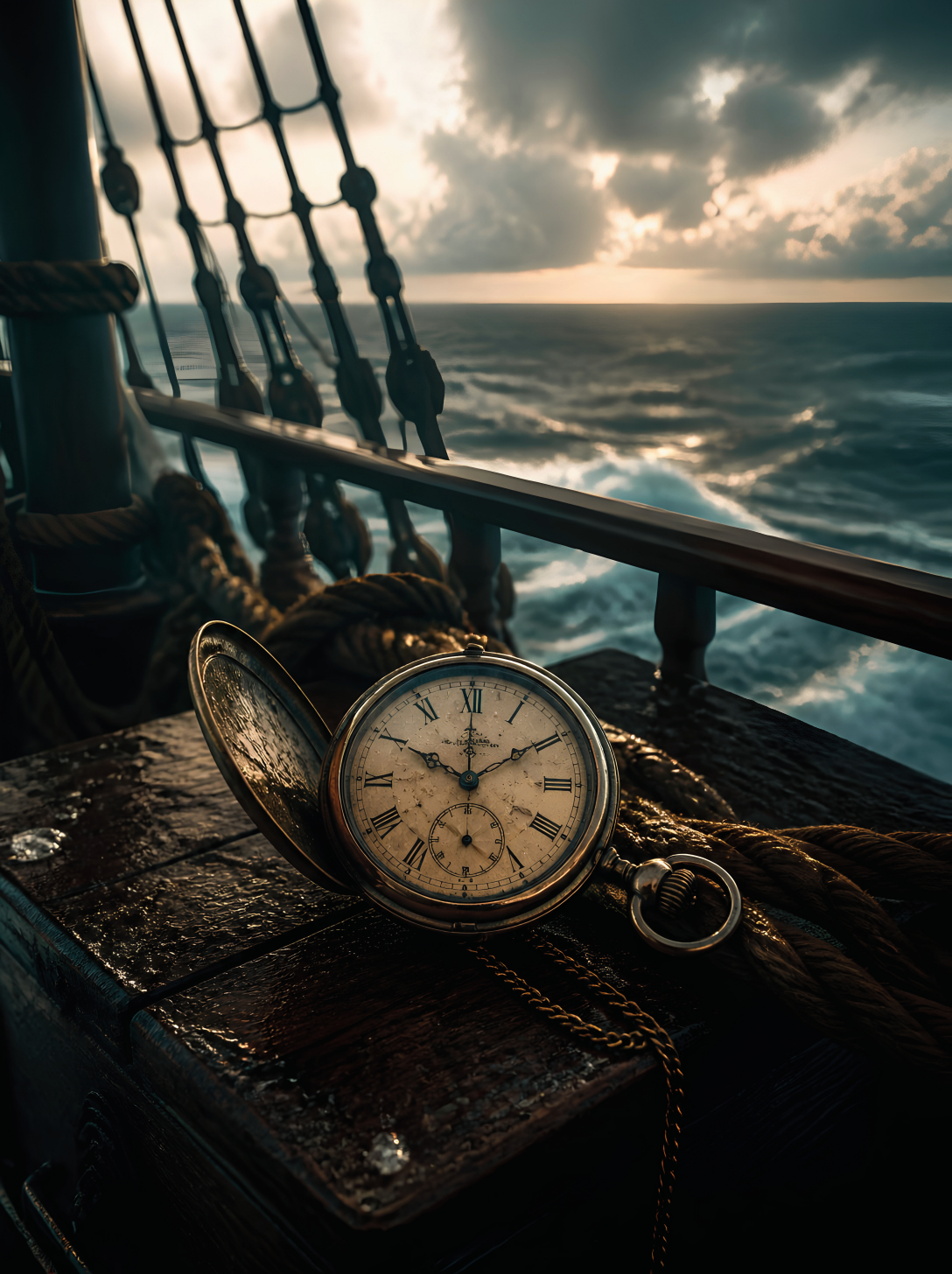
“We cannot direct the wind, but we can adjust the sails.” — Dolly Parton
I read this quote this week, and in light of the tragedy of her recent passing, I felt inspired to write this article, particularly in how we can use this philosophy to approach CVD and other medical changes in our lives, pacemakers or otherwise.
When thinking about people with disabilities, cardiac or otherwise, we don't often picture them on the ocean, except perhaps a pirate with a pegleg or a hook for a hand. But that's no longer true. Sailing with CVD, and even a pacemaker, is possible. It just takes a little effort and perhaps a few adjustments to your plans to do it safely.
There is something about the ocean that calls to us on a primal level, and those waves wait for no one, whether they be healthy or sick. This has rung true for millennia; whole cultures have turned to the sea for sustenance, transportation, trade, religion, and recreation, and it remains a defining feature of coastal life around the world to this day. Personally, although I'm from a landlocked U.S. state, I've witnessed this pull toward the ocean in Hawaii, Hainan, and along Spain's coasts. Still, before stepping aboard, it's worth asking: does having a pacemaker impede one's ability to go sailing? Luckily, my research on this topic turned up surprisingly positive answers, so let's take a look.
While sailing, from a romantic perspective, might call to mind images of billowing sails and massive ships careening over the waves, the definition of what falls under the umbrella of "sailing" is considerably broader than that. As the web article Sailing: A Heart-Healthy Guide For People With Cardiac Conditions, from My Movement Medicine, explains, “Sailing includes dinghies on lakes, keelboats on coastal waters, and larger cruising yachts” (My Movement Medicine, 2025). So if you decide to jump in a boat, especially as the winter months approach and a Caribbean cruise starts sounding tempting, remember that whether you're cruising on a yacht or floating about in a little dinghy, it all counts as sailing.
Before we discuss the needs of someone with a pacemaker in this sport, it's important to recognize the connection between heart health and device safety, and how each directly impacts the other. So, before we turn to the device itself, we must first discuss the significance of cardiovascular health in this dynamic and why it matters to sailing.
The aforementioned article lays out the positive benefits sailing offers for one’s heart health, and its point is reasonable and compelling. The article credits sailing with ‘steady aerobic work that supports blood pressure, lipid profile, insulin sensitivity, and mood,’ ‘functional strength and balance from controlled movements on an unstable surface,’ and ‘social connection and outdoor time — both linked to better adherence and wellbeing’ (My Movement Medicine, 2025). So, there are genuine physical, cardiovascular, and social benefits of sailing with this.
Despite these potential positives, however, the article makes it clear that this isn’t an activity one should just hop in and master right away. If one has a heart condition, “the aim is ‘little and often,’ building weekly minutes of moderate activity per cardiovascular guidelines” (My Movement Medicine, 2025). It likely is alluding to the fact that if you have a heart condition, you may tire more easily. Plus, an activity like sailing can even aggravate your heart without meaning to. I know this firsthand: I'm writing this article from bed after accidentally triggering my arrhythmia for the crime of doing the dishes.
Even sailors, people who devote their lives to being on ships and sailing the seas, are, medically speaking, no more healthy cardiovascularly than the rest of us. An article, “The Risk Of Coronary Heart Disease Of Seafarers On Vessels Sailing Under German Flag,” points out how “it can be assumed that seafarers present a healthier population than employees ashore” (Oldenburg et al., 2010), yet “in this study, however, CHD risk of seafarers was similar to that of the reference population. This may indicate that working onboard implies a high coronary risk. Furthermore, the study results suggest a tendency of increased risk of CHD among seafarers with longer job duration at sea” (Oldenburg et al., 2010). It should be noted that CHD in this context refers to heart disease, whereas in my articles, “CHD” usually refers to congenital heart disease. This means that the previous article’s caution about duration for cardiovascular health may be medically sound.
So, it can be concluded that it’s not the level of athleticism a person has that determines cardiovascular health, but instead how well they care for their heart along the way. So, the heart and its needs should come first in determining one’s overall health.
My point is that, for something as potentially athletic as sailing, depending on the kind of ship you are on, and whether you are pulling line and fastening the sails or lying on deck sipping mimosas, it is wise to know and respect your limits. I’m not saying let your condition define you or diminish you, but let it be a voice in your decision-making process rather than something to be conquered.
For this reason, it is also essential to consult your doctor before you go on the boat. This way, your medical professional is aware of what you are doing and can be informed and discuss the matter in case there are any particular precautions you should take for yourself before stepping aboard. Also, the farther from the shore you are, the more time it will probably take for you to receive medical care. That is why a clean bill of health from your doctor is absolutely essential to avoid unnecessary danger.
Personally, even with my heart condition, I love sailing. I used to go sailing with my dad and my brother in Michigan in the summer, and it was always a lovely time and a treasured memory. However, growing up in landlocked Colorado made this pastime uncommon, and honestly, my childhood dream was to be a pirate sailing the seven seas.
And so, despite my CVD, I have still sailed a few times, and I can say with certainty that, with or without a heart problem, the experience is breathtaking! As long as you do it safely and, non-negotiably, with a life vest.
Pacemaker and Sailing:
Now, if you have a pacemaker, this particular sport opens up a whole new set of potential risks. First and foremost is the risk of damaging the device. Especially if you get whacked by a heavy rope, struck by a swinging boom, or hit by any heavy object that hits the area around the device, it can be dangerous. So, I recommend wearing a life vest for buoyancy, extra padding, and ensured security, along with water safety. This is especially important because the farther you are from shore, the more dangerous the situation could become if the device is damaged, so it is wise to take extra precautions.
As long as it doesn't break, I have found you should be fine. If you have an older device, however, I'd do an extra doctor’s check on the device's health just to be sure it isn't in danger of spontaneously breaking… trust me, it gets really dangerous really fast if that happens.
Tips:
Talk to your doctor.
They know the dangers and the benefits and can effectively help you compare the pros and cons to come to a decision that is right for you by working with you on your own health.
Research nearby hospitals in case the worst should happen.
With CVD, it is always best to be prepared. Not necessarily in a morbid or pessimistic sense, but in an authoritative, responsible way. In case something breaks or goes wrong, which it most likely will not, it is best to be prepared and know of a nearby medical facility you can go to for help.
Be steady.
Steady on your feet and steady on your pace. Sailing is an incredible experience, and it is best to enjoy it without overdoing it. Keep your balance steady, your breathing steady, and be sure not to push yourself too hard, but to enjoy the breathtaking views and the fresh sea air.
Conclusion
So, when we think about sailing, now that people with CVD and pacemakers can theoretically participate, we can no longer think of disability only as pirates with peglegs on ships… but as something far more interesting. Since people with pacemakers technically fall under the category of “cyborg,” we can upgrade the social narrative to “cyborgs on ships.” Although common sense dictates caution, this is by no means a hard barrier. It only proves that when you have an illness, even one as serious as CVD, it is not a question of “what can I do?” it’s “How do I do that safely?” and more often than not, with your doctors on your team, the answer usually comes out positively as long as proper precautions are taken and common sense is respected. So, with nothing stopping people with CVD or pacemakers from boarding, we can proudly say, “Bring me that horizon!”
What do you think? Can you relate?
Comment below.
Tune in next Monday and Friday for more! I will be writing more now that I'm finally feeling better, so I'm getting a new, more frequent schedule.
Keep ticking, everybody!
P.S. Are there any aspects of CVD health or pacemakers you’d like to know more about?
Feel free to email me at:
Reference List:
My Movement Medicine. (2025). Sailing: A Heart-Healthy Guide For People With Cardiac Conditions. [online] Available at: https://www.mymovementmedicine.co.uk/post/sailing-a-heart-healthy-guide-for-people-with-cardiac-conditions [Accessed 8 Sept. 2026].
Oldenburg, M., Jensen, H.-J., Latza, U. and Baur, X. (2010). The Risk Of Coronary Heart Disease Of Seafarers On Vessels Sailing Under German Flag. Int Marit Health, [online] 61, pp.123–128. Available at: https://journals.viamedica.pl/international_maritime_health/article/viewFile/26219/21013 [Accessed 8 Sept. 2026].
#cvd #chd #sailing #sports #travel #arrhythmia #afib #medicine #summer #autumn #hearthealthy #medicalprocedure #procedure #cardiac #cardioversion #chronicillness #medicaldanger #medicaldevice #achd #congenital #heartsurgery #cardiology #experience #pacemaker #hope #advice