
CVD And Disability: More a Web than a Road
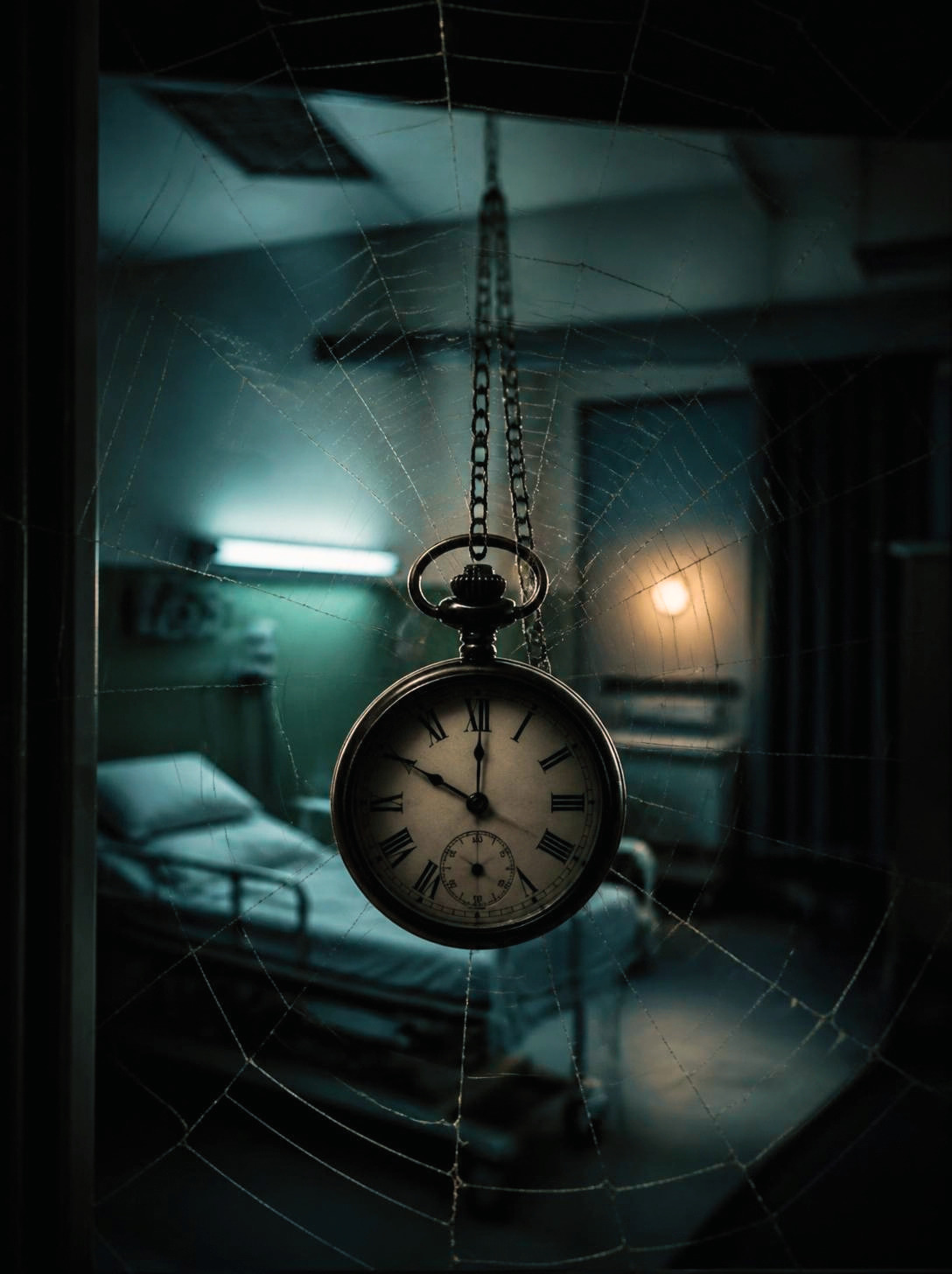
“The problem with heart disease is that the first symptom is often fatal.”
-Commonly Attributed To Michael E. Phelps
This quote captures an important first impression of cardiovascular disease (CVD) that comes to mind when the word is brought up in conversation. It's like watching someone stand on train tracks as a massive steel machine barrels down at them at several hundred miles per hour. An accident you can't look away from, but you can only save yourself by creating distance from yourself and the splash zone. However, heart disease is more than that. It can be a long haul that is not so much an impending death, but rather a battle to manage and maintain oneself that takes, frankly, a gargantuan effort and heroic bravery to do. Yet another shadow following CVD is the idea that if it is not a slow and inevitable decline, then the diagnosis is a one-way march towards increasing levels of disability, which will also lead to increased incapacity and then to a speedy demise.
However, this is not the case. As someone who has recently faced death due to multiple instances of familial mismanagement throughout the years in a desperate attempt to try to control me, and crawling out of the grave to return to full or almost full health over and over and over again, I can assure you that this is not the case either.
From my experience, I can tell you that CVD does not mean instant or impending doom, nor does it mean disability. However, it simply means maintenance is necessary to prevent those scenarios.
Disability and CVD:
Now, I in no way meant to say I don't experience disability. I have a shorter arm, and when I am in the mountains, I move slower than my cardiovascular-healthy counterparts. Often, this leads me or others to overestimate my ability. My doctor, on one of my visits this last year when I was recovering from the ablation and lamenting how I could not keep up with my family in the mountains on their walk, made me feel completely inadequate as a member of the family and as a human being. I also told her about how I could not walk very far three days after surgery, as they said I should be able to… (for your own reference, if you have an ablation or any such procedure, it is unwise to stay sedentary for too long, but it is a worse idea to force yourself through the pain by going on a 1/3 mile walk just to meet social expectations).
As a result of my telling her this story, my doctor turned to me and said with a completely straight face, “You have friggin critical congenital cardiovascular disease! How do you not get that yet!” And to some degree, this was completely valid, and the frustration was completely justified.
But, to be honest, that was the first time someone has ever given me advice that was strictly for my benefit and not simply to support others’ emotional comfort or to build a narrative of incompetence around me through a web of lies, neglect, and abuse. However, this made me think.
She was not calling me weak because of my illness, but recognizing that I need to be cautious. But of what? Physical dangers or the ones who knowingly and willingly put me in those situations?
One thing that CVD does not do is define my life unless I trust people who put me in dangerous situations due to symptoms it causes. Such as an extended reaction to sewer gas exposure, mold causing havoc with my asthma, or advancing symptoms of heart failure such as a swelling abdomen… but all of these things could have been avoided if a single person believed me when I said, “I can’t breathe,” and listened to me when I said it was caused by something in the air.
I have 2 BAs and an MA, and I have lived and worked on 3 continents. And yet, while I was in the middle of my research, the people I trusted insisted I was too stupid to know what I was doing and tried to commandeer it to make themselves feel better, despite my full faith in my supervisors.
This is not because I am actually stupid, but the thing is, I appeared to be “slow.” But in a continuous state of hypoxia, where one can no longer express oneself and the effort to stay alert is energetically expensive, one learns to keep count of how people treat you.
Over the past 5 years, I was able to stay alert around people I cared about and when the situation called for it. Twenty-three times, others said to me that “she’s just not aware!” when I was perfectly aware. In addition to this, nine times I was told to my face and over the phone that “you are not family.” But there were so many other jabs taken when I couldn’t breathe. There were so many other examples of this assumed deficiency, and how they expressed it in my treatment too.
Once, I was sitting in a garden with family. One of them, someone more invested in being seen as sensitive than in actually being so, asked me, "So how do you identify?" I asked why she wanted to know, and she said she asked everyone. Barely able to breathe, I answered, "As your family, and as a person." She laughed with her friends. "She just doesn't understand," she said, then clarified: "Do you identify as disabled?" I said no. The whole group laughed and kept mocking me as if I weren't there… and perhaps, to them, I never was.
My point is, I know the difference between being treated with dignity and being treated as “stupid” because of the symptoms of my CVD, which flared for 5 years and could have been stopped if anyone listened to me. But doing so would mean admitting I was a person, not a social tool to be passed around for amusement.
This “stupidity” narrative peaked when I was recovering from my ablation, and I was explaining my research to my family. My supervisors and the chair of my department called the research groundbreaking, but one family member got upset and even told me my field was “subjective and useless.” Granted, heritage and anthropology can range from being based on "pure subjective feelings,” but my work is based on qualitative and quantitative analysis of intersectional factors based on the modernization of an ancient institution and how certain recently implemented factors could impact the health and well-being of a certain demographic of medically vulnerable visitors. So, I work on the far more objective area of that spectrum in an arguably extremely complicated field.
This discussion developed into an argument meant to “remind me of my place” and ultimately keep me where they have decided that I belong.
Beneath them.
Now, if you have a heart disease and some symptoms that, if flared, can make one appear “disabled,” how does that necessarily define one’s “place” or “worth?” When one is brought up in an intersectional hierarchy of health and wealth, one's proper place is always and forever beneath their feet.
So, in this dynamic, I am perpetually at the bottom, not because of my illness but actually because I can never escape my critical congenital condition; therefore, it is assumed that my fate is sealed and I am treated as “unable,” “intellectually deficient,” and perpetually “broken.”
Thanks to the cardioversion, ablation, and the removal of the triggers of my asthma that I identified, I have recovered my cognitive abilities to an even better degree than they were before.
But the irony is that none of this needed to happen. These symptoms were entirely dismissed and ignored because of the presumed aforementioned “cognitive disability.” I could have been saved five years of medical torture and four unnecessary surgeries if anyone had just listened to me when I said, “I can’t breathe.”
In my experience, there is nothing worse than being patronized, underestimated, and dehumanized by default because of one’s congenital disability. So, in this case, was I ever fighting my disability or fighting my family’s narrative and their assumption that condemned me to torture for the sake of their emotional comfort and social gain?
The thing is, I, for the majority of my life, subscribed to their delusion and believed that my heart condition had to be subdued, conquered, and overcome, and only then could I be treated like a human being with respect, dignity, and autonomy. Anything less than that was a crime against the family for which I was tried and deemed guilty at birth.
It's why, in the garden, I said no. And it is for that reason that I have spent my whole life trying to prove that I am not disabled, to academically prove myself. Now, I have always loved books, reading, culture, heritage, and most of all stories. But in my family, there is nothing worse a person could be, and any signs of my illness were just a signal of my own weakness and selfishness by inconveniencing them financially, physically, or, worse… emotionally.
One example was when I was home recovering from the ablation. I was still working on walking smoothly, so I wanted to get my mind back while I waited. To do this, I read a few pages from a book in the old library, “The Ides of March.” A family member walked by after reading a particularly interesting line, and I asked if they had read it. They said no. I asked if they read any of the books in the old library, and they said no. And that the only time they ever would be when they can no longer move and be active because they will want to be dead. Understandably, I closed the book and cried after they left.
So, to ease their emotions, I did what I could to prove I was worthy of existing. While I have many experiences of disability with CVD, I was never allowed to recognize it as such because my pain made others around me uncomfortable.
However, in terms of disability and CVD, I would argue this is too common an experience for people with the illness and often the reason many people with it may not recover, particularly the neglect or systematic assumption of superiority. Whether they are young or old, people with chronic illness, especially CVD, choose to hide it or push past their limits, which ultimately leads to further debilitation from the illness.
One article, “Association of Cardiovascular Disease and Cardiovascular Health with Disability Status In A Nationally Representative Sample Of US Adults: CVD And CVH Among Adults With Disabilities” by G.J. Jerome and C.L. Lilly connects the dots between CVD and disability. It points out how “an estimated 67.2 million adults, more than one in four noninstitutionalized adults in the U.S., report having a disability. Unfortunately, adults with disabilities face barriers to accessing healthcare, are less likely to receive preventive care, and may experience providers who hold misconceptions about supporting those with disabilities. Addressing these disability-related health disparities is a national public health priority” (Jerome and Lilly, 2024). However, this is easier said than done with CVD, especially because “cardiovascular disease (CVD) is a significant healthcare concern in the US, with the direct and indirect cost of CVD estimated at $422 billion in 2019–2020. Although CVD is identified as a leading contributor to disability, the relationship between cardiovascular disease (CVD) and disabilities is complex” (Jerome and Lilly, 2024). This complexity is based on how CVD can cause disability through stroke, heart attack, deterioration of the heart muscle, or by being a contributing factor to other conditions like breathing problems; or if it is well-managed, then it does not necessarily impact one’s quality of life, so that is why it is difficult to pin it down as “disability,” because fundamentally it is a factor, not a disability itself. But that is part of why it is such a complete pain to get healthcare with it.
Furthermore, the article concluded that “This study provided evidence that compared to adults without disability, those with disabilities had higher rates of CVD and lower CVH scores” (Jerome and Lilly, 2024). CVD can be caused by other disabilities and conditions that limit physical activity. So it is more like a crossroads station of disability that people can either stay or leave. But it cannot be questioned whether it is a factor. That is why the article states that “the results of this study are aligned with the call to action to improve health and wellness of persons with disabilities, which should include programming for health behaviors such as diet, physical activity, sleep health, and tobacco/nicotine cessation” (Jerome and Lilly, 2024). The authors recommend health-behavior programs for people with disabilities, and in my experience, managing my heart health has been what keeps disability at bay.
Tips:
Disability is nothing to fear or be ashamed of.
Coming from a family who bases one’s worth directly on the intersection of health and wealth, I grew up deeply ashamed of my heart condition. I was left behind while the family went biking, hiking, skiing because I held them back. So oftentimes, I would push myself beyond my limits to prove myself, as if self-respect and familial acceptance lay just on the other side of that pain… and unintentionally caused myself to physically break, leading to a whole new level of blame. My point is: if you have limits, respect them. But do not let them control you. Push yourself within reason and with medical professional guidance so you can achieve the goals you want, but do not break yourself along the way. Protecting your life is more important than anything.
If your CVD symptoms incapacitate you, it may just be temporary. Don’t give up on yourself. Let yourself heal not in the hope of survival, but because you believe you will thrive.
If others give up on you, never give up on yourself.
To be honest, there were times these past 5 years when I genuinely wanted to give up on myself because the symptoms were so horrible. I had my best friend walk out on me after admitting “You were never my equal.” She assumed my illness was temporary and that she and everyone else who mistreated me could do so and get away with it because they assumed I was not going to live long enough to tell people about it.
But because of this stubborn streak and the fact that I knew there was something making me sick and I could fix it, I found the source and fixed it only after seeing how people treat you with a congenital illness the instant your symptoms show up.
Even if you have CVD, know that even if the world gives up on you, your heart, even if it struggles, is with you to the end.
Always go to your doctor appointments.
Doctors want to help you maintain your health, and the least you can do is go to your appointments for your own health's sake. This will mediate symptoms of your illness and help you manage it. Help them help you.
Manage your medications exactly as prescribed. No shortcuts.
For all that is holy, take this seriously. Personally, I am literally maintained by machines and medicine that keep my machines and my body running. One wrong move and I’m toast. I don’t say this to scare you, but if you have CVD, you are maintained by a delicate balance. The medicines maintain that balance, so if you maintain it, then they will maintain you.
Don't let fear of your future keep you from taking care of yourself.
As someone who has more than their fair share of medical scares, I can sometimes become frozen by fear of doing something wrong and causing my own health to worsen. This was because my congenital heart problem was blamed on me my whole life. It can be frightening to feel something is off and jump between “I’m overreacting” and “something is seriously wrong!” but the only way to know for sure is clarity, and your doctors provide that. So, if you feel something is wrong, go to your doctor. It will protect you from increasing your level of disability because of this illness. This frozen reaction of doing nothing and waiting for it to go away will likely lead you directly to what you are trying to avoid.
Conclusion:
CVD and disability are connected, but more like a spider web than through a direct path. Sometimes one can develop disability because of CVD, or one can be disabled and develop CVD as an aftereffect. Other times it happens at birth, but more often it occurs as one ages. However, oftentimes when we think of CVD, we only think of it at the end of our lives and just assume that heart disease and heart failure mean a single direct road to the inevitable. But many people live with CVD and the disability it temporarily or permanently causes us. Sometimes the illness arrives as the result of one’s own actions; other times, it comes from birth; but at no point is it ever intentional, and people with CVD should be treated with respect no matter how or in what way disability may or may not have impacted their life as a result of the condition. My point is that disability and CVD are tied, but in an extremely complex way that should never be underestimated, lest narrow definitions and expectations leave people behind, at the cost of their health, dignity, and lives. CVD is not a one-way street. It is a journey, one that you should travel with your doctor and your future in mind.
What do you think? Can you relate?
Comment below.
Tune in next Monday and Friday for more! I will be writing more now that I'm finally feeling better, so I'm getting a new, more frequent schedule.
Keep ticking, everybody!
P.S. Are there any aspects of CVD health or pacemakers you’d like to know more about?
Feel free to email me at:
Reference List:
Jerome, G.J. and Lilly, C.L. (2024). Association of Cardiovascular Disease and Cardiovascular Health with Disability Status In A Nationally Representative Sample Of US Adults: CVD And CVH Among Adults With Disabilities. American Journal of Preventive Cardiology, [online] 20, p.100893. doi:10.1016/j.ajpc.2024.100893.
#cvd #chd #disability #heartproblem #travel #arrhythmia #afib #medicine #disabilityawareness #chronicillnessawareness #autumn #hearthealthy #medicalprocedure #procedure #cardiac #cardioversion #chronicillness #medicaldanger #medicaldevice #achd #congenital #heartsurgery #cardiology #experience #pacemaker #hope #advice